Millions of people around the world live with anxiety, feeling its tight grip on their day-to-day lives. The hustle and bustle of modern life, coupled with personal challenges and societal pressures, often exacerbate these feelings. Yet, it’s important to know that you are not alone, and small, intentional changes in your daily routine can lead to significant improvements. Here, we explore 12 simple lifestyle changes that can help manage anxiety naturally.
1. Start with Mindful Breathing
Mindful breathing can be one of the most accessible ways to reduce anxiety. By focusing on each breath, you become more aware of the present moment, effectively reducing stress. Practice deep, slow breathing, inhaling through your nose, holding for a few seconds, and then exhaling through your mouth. Consistent practice for just a few minutes each day can make a profound difference.
2. Prioritize Quality Sleep
Sleep is an essential component of mental wellness. Lack of rest can negatively impact your mood and exacerbate anxiety. Focus on establishing a regular sleep schedule that allows for 7-9 hours of rest each night. Consider modifying your environment to make it as conducive to sleep as possible, such as reducing light and noise and maintaining a comfortable temperature.
3. Incorporate Regular Exercise
Physical activity is a powerful tool for anxiety management. Exercise releases endorphins, chemicals in the brain that act as natural painkillers and mood elevators. Aim for at least 30 minutes of moderate activity most days of the week. Whether it’s a brisk walk, yoga, or dancing in your living room, find an activity that you enjoy.
4. Eat a Balanced Diet
Nutrition plays a vital role in mental health. A balanced diet rich in whole foods can help stabilize your mood and reduce anxiety. Incorporate plenty of fruits, vegetables, lean proteins, and whole grains into your meals. Additionally, try to limit processed foods and caffeine, which can sometimes intensify anxiety symptoms.
5. Connect with Nature
Spending time outdoors can have calming effects on the mind. Nature exposure is linked to increased feelings of well-being and reduced anxiety. Whether it’s a walk in the park, a hike in the mountains, or simply sitting in a garden, try to make time to immerse yourself in nature regularly.
6. Practice Gratitude
Cultivating a gratitude practice can shift your focus from negative thoughts to positive ones, reducing anxiety. Consider keeping a gratitude journal where you record three things you are thankful for each day. This practice helps reframe your mindset and highlights the good in life, fostering a more positive outlook.
7. Limit Screen Time
The digital world can often contribute to feelings of anxiety. Constant notifications, social media comparisons, and overexposure to distressing news can be overwhelming. Setting boundaries on screen time, especially before bed, and engaging in digital detoxes can remarkably improve mental clarity and reduce anxiety levels.
8. Engage in Creative Activities
Creative expression can serve as an emotional outlet. Activities like painting, writing, or playing an instrument allow you to process feelings through non-verbal means. Embrace your creative side without judgment, focusing on the process rather than the outcome.
9. Build a Support Network
Having a strong support system can be incredibly beneficial for managing anxiety. Friends, family, support groups, and community resources can offer emotional support and practical advice. Sharing your feelings and knowing you have people to turn to can alleviate stress and provide comfort.
10. Set Realistic Goals
Goals motivate us, but unattainable expectations can lead to stress and anxiety. Set small, achievable goals that move you incrementally towards a larger objective. This approach provides a sense of accomplishment and breaks down overwhelming tasks into manageable steps.
11. Foster Community Connections
Community engagement can help combat feelings of isolation and anxiety. Volunteering, joining clubs, or participating in local events connects you with others who share similar interests. These connections can pave the way for meaningful friendships and a sense of belonging, enhancing emotional well-being.
12. Embrace Meditation
Meditation is a long-standing practice known for its stress-relieving properties. Regular meditation can help calm the mind, improve focus, and increase self-awareness. Explore different forms of meditation, from mindfulness to guided imagery, to find what resonates with you.
Understanding that improving mental health often involves trial and error is crucial. What works for one person may not work for another, and it requires patience and compassion towards oneself. While these lifestyle changes can provide significant relief, remember that professional help is always an option if needed.
Taking steps to improve your mental well-being does not happen overnight, but each small step contributes to your overall journey. Engage with supportive communities like Fitness Hacks For Life, where resources are dedicated to fostering mental wellness through accessible and empowering content. Together, these efforts can lead to transformative changes that enhance your quality of life.
If you find yourself overwhelmed or unsure where to start, focus on integrating one or two changes at a time. Gradually, these small shifts will compound, building resilience and creating a stable foundation for emotional balance. Embrace the journey with patience and kindness towards yourself, knowing that every step forward is a testament to your strength and commitment to better mental health.
Frequently Asked Questions:
How can mindful breathing quickly reduce anxiety?
Practice deep, slow breaths daily: inhale through your nose, hold briefly, and exhale slowly through your mouth for a few minutes to boost present-moment awareness and calm your nervous system.
Why is consistent sleep so important for anxiety management?
Aim for 7-9 hours nightly on a regular schedule in a dark, quiet, comfortable space—poor sleep worsens anxiety, while quality rest stabilizes mood and emotional resilience.
What kind of exercise works best for easing anxiety naturally?
Do at least 30 minutes of moderate activity most days (like walking, yoga, or dancing) to release endorphins, which naturally lift mood and act as a buffer against stress.
How does diet play a role in reducing anxiety symptoms?
Focus on whole foods—fruits, veggies, lean proteins, and whole grains—while cutting back on processed items and caffeine to help stabilize blood sugar and mood swings.
Why should I limit screen time if I have anxiety?
Set boundaries on notifications, social media, and news (especially before bed), and try occasional digital detoxes to lower information overload, improve focus, and prevent heightened overwhelm.
The Rise of Online Support Communities for Depression
Imagine a place where you can share your thoughts without judgement, where people truly get what you’re going through, and there’s a constant sense of support. For many battling depression, online support communities have become that safe haven. In an era dominated by digital interaction, these communities offer something unique: connection, understanding, and solidarity—all critical components in managing depression.
The internet has reshaped how we connect and share. Traditional support networks often rely on physical proximity or scheduled meetings, something that the online world transcends, offering accessibility to anyone with an internet connection. This immediacy and availability mean individuals can seek and find support anytime they need it, which can be crucial during moments of loneliness or despair.
Why Online Support Matters
A sense of isolation is a common experience among those with depression. While traditional therapy offers a structured environment for discussing mental health, it might not fulfill the need for community and shared experience. Online support communities fill this gap by embracing empathy and collective healing. Here’s a deeper look into why this is significant:
1. Accessibility and Anonymity
The beauty of online communities lies in their accessibility. For many, attending in-person support groups can be daunting or impractical due to location, mobility, or comfort levels. Online platforms break down these barriers by offering flexible engagement on one’s own terms. Moreover, anonymity can encourage openness—users may feel safer expressing their feelings without fear of stigma.
2. Diverse Perspectives and Experiences
Each member brings a unique story, contributing to a tapestry of experiences and strategies for coping with depression. This collective knowledge becomes a powerful resource. Reading about someone else’s journey can provide new insights or approaches, while also reinforcing that no one is truly alone in their struggles.
3. 24/7 Availability
Depression doesn’t adhere to a 9-to-5 schedule; neither do online communities. Whether it’s finding courage during a midnight crisis or seeking advice on a quiet afternoon, members have round-the-clock support. This constant availability can be particularly comforting, as members know that at any time, they can reach out and find someone willing to listen.
Finding the Right Community
While the benefits are plentiful, finding the right online community can feel overwhelming given the vast number of platforms available. Here are a few considerations to guide you in choosing the most suitable community:
Platform and Medium
Some individuals thrive in forums where discussion threads allow for detailed exchanges, while others might prefer the immediacy of chat rooms or social media groups. Exploring a few different platforms can help you understand where you’re most comfortable sharing and receiving support.
Moderation and Rules
A well-moderated community is crucial. Ensuring that there are clear rules in place to prevent bullying or harassment is key to maintaining a supportive and safe environment. This also facilitates constructive interactions that adhere to group norms and respect individual boundaries.
Purpose and Focus
Some communities may be geared towards specific demographics or approaches to mental health, such as mindfulness, cognitive behavioral therapy (CBT), or creative expression. Aligning with a group that resonates with your values and needs can enrich the experience and provide tailored support.
Navigating Challenges in Online Support
While online communities offer significant advantages, they’re not without challenges. Awareness and preparation can help in navigating these hurdles effectively:
Digital Burnout
Spending excessive time online can lead to burnout, exacerbating feelings of isolation and disconnection. Finding balance is essential—community support should complement offline activities and self-care practices.
Misinformation Risks
The internet is rife with information, not all of which is accurate or helpful. It’s vital to verify any advice received from online communities and consult with mental health professionals when possible.
Privacy Concerns
Despite the veil of anonymity, privacy can still be a concern. Being mindful of the information you share and familiarizing yourself with the platform’s privacy policy can protect your identity and personal data.
Creating a Space for Healing
For those considering starting their own online support group, there are important factors to consider to create a welcoming and effective environment:
Define Your Mission
Articulate the purpose and goals of your community. Whether it’s providing peer support, sharing resources, or offering tips for managing symptoms, a clear mission helps guide members and creates cohesion within the group.
Foster Inclusivity
Encouraging diversity in participants enriches the dialogue and provides a wider range of perspectives. Establishing guidelines for inclusive language and respectful interactions ensures everyone feels valued and heard.
Develop Structured Support
While open discussions are beneficial, having structured components such as regular check-ins, expert Q&As, or themed sessions can provide additional value. Structure can offer members predictable tools and events to look forward to, aiding in maintaining engagement.
An Example to Consider: Fitness Hacks For Life
Operating as a nonprofit focused on mental health, Fitness Hacks For Life provides a model for how structured online support can be achieved. By offering a variety of self-help resources and a community-centered approach, they pave the way for individuals seeking to manage depression through practical, small lifestyle changes. The commitment to accessibility ensures that anyone can tap into their resources without financial barriers. For more information, you can visit Fitness Hacks For Life.
How to Engage Effectively
Contributing to an online community is a two-way street. To enrich both your own experience and that of others, try these engagement strategies:
Share Authentically
Trust is fostered when members share their experiences with sincerity. Sharing struggles and successes not only helps you process your own journey but can also inspire and encourage others.
Listen and Respond Constructively
Active listening is a critical component of support networks. It’s important to offer responses that are empathetic and validating, reinforcing the shared commitment to support.
Set Boundaries
It’s healthy to set personal boundaries regarding the amount of time and emotional energy you dedicate to the community. This ensures that your involvement doesn’t negatively impact your well-being or become burdensome.
Moving Forward with Empowerment
Online support communities for depression are a testament to the power of human connection, adaptability, and resilience. As technology evolves, so too does our capacity to create spaces that nurture mental wellness. Engaging in these communities opens doors not only to support but also to personal growth and empowerment.
The next step in your journey might be reaching out, sharing your story, or simply listening to someone else’s. Whatever it is, know that these online communities are a resource available at your fingertips, ready whenever you are.
Final Thoughts: Cultivating Hope
Building a supportive community online isn’t just about shared struggles; it’s about cultivating hope, fostering change, and recognizing that improvement, no matter how small, is possible. Each interaction shapes the healing narrative, creating ripples of impact that extend beyond individual screens and into the fabric of everyday life. Embrace this accessible network as a fixture in your mental health toolkit, one that champions collective healing and personal empowerment.
Anxiety is a natural response to stress, characterized by feelings of tension, worried thoughts, and physical changes like increased blood pressure. While anxiety is a normal part of life, chronic anxiety can disrupt daily activities and affect mental well-being. Understanding anxiety is crucial for addressing it effectively with self-help strategies.
Anxiety manifests in various forms and intensities, from generalized anxiety disorders (GAD) to panic attacks. Each type impacts individuals differently, necessitating personalized strategies for management. Recognizing the specific challenges anxiety presents is the first step towards empowerment and control.
Why Self-Help Strategies Matter
Self-help strategies empower individuals to take control of their mental health, often serving as a bridge between professional care and personal management. These strategies provide tools for individuals to navigate anxiety on their terms, fostering a sense of independence and confidence.
Moreover, the accessibility of self-help strategies means anyone can begin their journey to mental wellness at any time. By focusing on small, intentional actions, people can incrementally build resilience and break the cycle of anxiety in their everyday lives.
Evidence-Based Self-Help Strategies for Anxiety
Mindfulness Meditation
Mindfulness meditation involves focusing your mind on the present moment. It reduces anxiety by interrupting the stress response and creating space for awareness.
Set Time Each Day: Start with short, manageable sessions—5 to 10 minutes focusing on breathing or a single object. Gradually increase the duration as you become more comfortable with the practice.
Guided Meditations: Consider using apps or online resources that offer guided sessions, easing new practitioners into mindfulness with structure.
Cognitive Behavioral Techniques (CBT)
CBT aims to change patterns of thinking or behavior behind people’s difficulties. It’s especially effective for anxiety disorders by addressing the thoughts fueling anxiety.
Journaling Thoughts: Keep a journal to track negative or distorted thinking patterns, identifying triggers that cause anxiety.
Challenge Negative Thoughts: Once identified, challenge these thoughts by questioning their validity and reframing them more positively.
Regular Physical Activity
Exercise is known to release endorphins, enhancing mood and serving as a natural anxiety antidote.
Find Enjoyable Activities: Whether it’s jogging, yoga, or dancing, choose activities you enjoy to create sustainable engagement.
Consistency Over Intensity: Regular, moderate exercise is often more beneficial than sporadic, intense workouts. Aim for 30 minutes most days of the week.
Breathing Exercises
Simple breathing exercises can help regulate the nervous system and reduce anxiety symptoms quickly.
4-7-8 Breathing Technique: Inhale for a count of 4, hold for 7, and exhale for 8. This method calms the mind and body simultaneously.
Deep Belly Breathing: Focus on deep, abdominal breathing to engage the body’s parasympathetic nervous system, promoting relaxation.
Progressive Muscle Relaxation (PMR)
PMR involves tensing and then slowly relaxing each muscle group in the body, helping relieve physical tension associated with anxiety.
Audio Guides: Use online tutorials or audiobooks to guide you through each muscle group, ensuring thorough relaxation.
Regular Practice: Integrate PMR into your nightly routine, creating a clear transition from the stress of the day to restfulness.
Establishing Sleep Hygiene
Quality sleep is crucial for managing anxiety. Improving sleep habits can reduce symptoms and provide rejuvenation.
Create a Routine: Go to bed and wake up at the same time daily, optimizing your body’s internal clock.
Limit Screen Time: Avoid electronic screens before bed to minimize blue light exposure that disrupts sleep.
Diet and Nutrition
The foods we consume have a profound effect on our mood and anxiety levels.
Balanced Diet: Incorporate whole grains, proteins, fruits, and vegetables to stabilize blood sugar levels and support mood.
Omega-3 Fatty Acids: Found in fish and nuts, they reduce anxiety and support brain health.
Social Connections
Having a support network is invaluable in managing anxiety, as humans are inherently social beings.
Share Experiences: Discussing emotions with trusted friends or family can reduce feelings of isolation.
Time Management
Organizing tasks can prevent overwhelm, a common anxiety trigger.
Prioritize Tasks: Use lists to prioritize activities, focusing on what is most urgent and important.
Set Realistic Goals: Break tasks into smaller, manageable chunks, reinforcing a sense of accomplishment.
The Role of Digital Tools in Anxiety Management
Apps and Online Resources
Numerous apps provide guided meditations, breathing exercises, and CBT techniques, facilitating practical, on-the-go access.
Supportive Online Communities
Virtual groups offer global connections, helping users find relatable experiences and solutions.
The Empowering Impact of Community
Harnessing the power of community can amplify the benefits of self-help strategies. Being part of a collective movement towards wellness can boost motivation and continuity in practices that alleviate anxiety. Fitness Hacks For Life, for instance, prioritizes community-centered growth by providing accessible resources aimed at mental wellness. Discover more at Fitness Hacks For Life.
Embracing the Journey Toward Well-Being
Self-help strategies equip individuals with tools to tackle anxiety and improve mental health actively. Though not substitutes for professional care, these approaches offer a foundation for personal growth and resilience. The journey towards mental wellness is ongoing, but by making small, meaningful steps every day, a balanced and empowering life can be realized.
Incorporating these strategies into your life can instill a greater sense of calm and control, paving the way to a more peaceful existence. Remember, every small step taken is a victory on the path to managing anxiety.
Proclaiming our older sister/ sibling energy, or wherever you may fall on the familial pecking order, is the latest and most significant form of self-expression. Growing up as the eldest sibling, I quickly learned that being an older sister had a particular set of responsibilities and expectations. I was meant to be the role model who had it all figured out. As I navigated through life’s challenges, I embraced this identity and allowed it to shape me into a confident and caring individual.
However, I realized it is our way of caring, and sometimes we care too much! I realized that proclaiming our older sister’s energy goes beyond fulfilling family roles; it becomes a way for us to assert ourselves in society. It becomes a declaration of our strength and resilience. No longer confined by traditional gender roles or societal norms, we redefine what it means to be an older sister – whether biological or not – by showing up authentically in our younger sibling’s time.
We show up whether we are needed: Firstborn women tend to be pleasers; everybody’s got to be happy,” says Kevin Leman, author of The Birth Order Book. “They’re the leaders of the family; they tend to be achievers. They’re more likely to be the pilot, the engineer, the architect, or the English teacher. Anywhere where structure and perfection pay, you’ll find the firstborn.” (He says firstborn men, alternatively, tend to be controllers.)
Embracing my older sister’s energy has been liberating. It also allows me to celebrate my accomplishments while supporting others in their journeys. Whether mentoring younger siblings or guiding friends through life’s ups and downs, wielding this power gives me a sense of purpose and fulfillment. By embracing this form of self-expression, we uplift ourselves and inspire those around us to stand tall in their unique identities within their families or communities. I do have to learn to let others have time to grow.
Feeling discounted, vulnerable, and self-conscious are just three common categories of emotional triggers.
Not all strong emotional responses are trigger reactions. If you receive news about the sudden death of a friend or relative, it is sane and sensitive to react with shock and grief. Your body experiences an automatic change in heart rate, breathing, pulse, brain synapses. This is not something to be avoided, nor is it healthy to try to control it.
When we react this strongly to a less significant event, though, it’s likely that the past is invading the present and hijacking our nervous system. In my work as a psychotherapist, I see nine categories of triggers:
Feeling self-conscious, such as when we’re alone in a group or comparing ourselves
Being discounted, such as when someone stands us up or ignores our calls
Feeling we are controlled, such as when someone is making decisions for us or is telling us what to do or feel
Feeling taken advantage of, such as when someone fails to pay us back on a loan
Feeling vulnerable, such as when we’re in a situation in which we feel exposed
Relationship experiences, such as when we’re lonely or feeling smothered
Boundary concerns, such as when someone is coming at us while drunk or disrespecting our space
Feeling uncomfortable about what is happening, such as when we witness someone being hurt or when someone’s words or actions disagree with our values
This routine is designed to take 15 minutes. It follows the Motion Creates Emotion (MCET) principle: we use the body to force the mind into a state of determination.
Phase 1: The “Laughter Squat” (Lower Body)
Squats are the foundation of physical strength. Adding a vocal component helps maintain breathing and reduces the perceived exertion.
The Move: Standard Squat (feet shoulder-width apart, chest up).
The Laughter Integration: As you descend, hold your breath. As you power back up to a standing position, let out a loud, forced “Ha-Ha-Ha!”
Repetitions: 3 sets of 12.
The Benefit: The “Ha” sound forces a full exhalation, engaging your core and preventing the “seriousness” that zaps your energy.
Phase 2: Arm “Joy-Presses” (Upper Body)
If you are using light weights or just bodyweight, this focuses on range of motion and “Simulated Joy.”
The Move: Overhead Press or Bicep Curls.
The Laughter Integration: With every extension of the arms, smile as wide as physically possible. Even a “fake” smile triggers the release of neuropeptides.
Repetitions: 3 sets of 15.
The Benefit: By connecting arm extensions with a facial “grin,” you are conditioning your brain to associate physical effort with positive emotional feedback.
Phase 3: The “Tricep Titter” (Arm Definition)
The Move: Tricep Dips (using a chair or bench).
The Laughter Integration: On each dip, try a “silent laugh” (shaking the diaphragm without making noise).
The Benefit: This doubles the core workout. The diaphragm movement involved in laughter mimics a secondary “crunch.”
Weekly Tracking for Resolutions
Day
Squats (Sets)
Arms (Sets)
Laughter Level (1-10)
Monday
Tuesday
Wednesday
Thursday
Friday
Pro-Tip for Consistency:
According to the behavioral health principles we discussed, the hardest part is the transition. If you feel too tired to start, tell yourself you will only do one “Laughter Squat.” Usually, the physical motion will create the emotion needed to finish the set.
At one point in time or another, we’ve all encountered or exhibited signs of manipulation—it’s an inherent aspect of human interactions to some extent. Recall a young child feigning tears or gazing at you with hopeful eyes when they desire something. However, as we mature, these manipulative behaviours morph into less adorable forms such as deceit, ultimatums, or other tactics aimed at controlling or influencing others to achieve certain outcomes. Recognizing these manipulative behaviours is essential to addressing them and establishing healthy boundaries for oneself and others.
Manipulation can be defined as a tactic where one individual attempts to sway another’s emotions to achieve a specific reaction or result, notes Anisha Patel-Dunn, DO, therapist and Chief Medical Officer at LifeStance Health. While the definition may seem simple, the manifestations of manipulative behaviour can be veiled as various interpersonal dynamics. Generally, manipulation is at play when one feels devoid of autonomy, choice, or the ‘license’ to set boundaries, states psychotherapist and psychoanalyst Babita Spinelli, LP. To help identify manipulation in real-life scenarios, we reached out to mental health professionals to shed light on seemingly innocuous actions that can be red flags. Here are five common yet subtle manipulative behaviours to be vigilant about:
Gaslighting Originating from the 1938 play Gaslight and its 1944 film adaptation, Gaslight, the term ‘gaslighting’ has become synonymous with a form of manipulation in which the manipulator causes the victim to doubt their reality. Sadly, this form of manipulation remains prevalent today, particularly in toxic relationships, says Spinelli. Confronting gaslighters with phrases like “We remember things differently” or “I am not interested in debating what happened with you” can help address this behaviour.
The Silent Treatment Here, the manipulator shuns communication with the other party, sometimes to assert control. While they may be genuinely upset, the silence is used as a tool of power, making the victim feel they’ve committed an unforgivable act, explains mental health counsellor Leon Garber, LHMC. Digital silence, like intentionally ignoring texts or emails to elicit anxiety or maintain control, is also a manipulative tactic, adds Spinelli.
Guilt Tripping Guilt tripping is aimed at making someone feel remorseful or embarrassed to sway their behaviour. It often involves reminding others of personal sacrifices made for them or evoking guilt over attributes the manipulator lacks, states Garber. Recognizing and addressing guilt tripping when it occurs is crucial for maintaining healthy interpersonal relationships.
Flattery While compliments are generally well-received, excessive or insincere flattery is a manipulative tactic. It often includes exaggeration to gain favour or maintain closeness, rather than fostering genuine connection, explains Garber. Being aware of and addressing insincere flattery when it occurs can help maintain authentic relationships.
Love Bombing Excessive expressions of love, especially in a budding relationship, can be a form of manipulation with the strategic intent to quickly entangle someone emotionally, explains Spinelli. Love bombing can also recur in relationships, particularly after a hurtful incident, as a way to seek forgiveness without addressing the underlying issue. Recognizing love bombing early on can help prevent long-term emotional distress.
Conclusion Remember, if a loved one’s actions are causing mental or physical distress, consulting a professional is advisable. Your well-being should never be a subject of negotiation. It’s important to stay informed and take proactive steps to maintain healthy relationships.
Prevention is the mantra of modern medicine and public health. Benjamin Franklin said it himself: “An ounce of prevention is worth a pound of cure.”
Unfortunately, childhood adversities such as abuse and neglect cannot be prevented by vaccinations. As we now know, a large proportion of adults go through adverse childhood experiences (ACEs) and can exhibit symptoms such as substance abuse. The symptoms seen in adults can in turn expose the next generation to adverse outcomes – creating a cycle that’s hard to break.
However, we can limit the impact of ACEs on future generations by taking a close look at what we are doing today – not only for our children, but for ourselves, as adults. Therefore, to prevent adversities for children, we must address the healing and recovery of trauma in adults.
Shifting the paradigm
The ACE Study, launched in the 1990s, offered a groundbreaking look at how childhood trauma can impact health decades later.
More than two-thirds of the 17,000-plus adults in our study reported at least one ACE, such as divorce, neglect or domestic violence in the household. These adults were at a greater risk for numerous negative health and behavioral outcomes.
When I present this research, I often get questions about the adult survivors. What has helped these adults survive to tell their childhood histories?
The ACE Study was not conceptualized to examine resilience. But I had always been curious about what helped these trauma survivors thrive. I wanted to understand not only what led to their ill health later in life, but what led some of them to report positive health, despite their backgrounds.
Promoting good health
Modern medicine and public health have traditionally focused on figuring out the origins of disease and how to prevent poor health.
In 1996, medical sociologist and anthropologist Aaron Antonovsky offered a different perspective. He suggested we look at health as a continuum and focus on what can promote good health. This approach, called salutogenesis, suggests that we as humans have the innate capacity to move toward health in the face of hardship.
In 2013, my colleagues and I published a study examining approximately 5,000 adults from the original ACE study who reported at least one childhood adversity. We focused on strategies that have been proven to promote good health – such as exercise, abstaining from smoking, access to emotional support and completing education at the high school level or higher.
Indeed, each of the factors listed was associated with reports of excellent, very good or good health among adult survivors. Depending on the factor, there was a 30 to 80 percent increased likelhood that the adult would report positive well-being. Survivors who had a college education were 2.1 times more likely to report positive well-being than those with no high school diploma. These findings were after considering their chronic conditions. We also found that the four factors were associated with a lower likelihood to report depressive feelings.
What’s more, the greater number of health-promoting activities a person participated in, the better their well-being seemed to be. Adult survivors with at least two factors were 1.5 times more likely to report good to excellent health. Those who reported all four factors were 4.3 times more likely to report good to excellent health, compared to those who engaged in none or one, even after considering their chronic conditions.
With that said, we need more rigorous studies to test these and other approaches that promote health and well-being. The studies presented examined only four factors and cannot be generalized to all adult survivors of ACEs.
How to start healing
From a survival perspective, the body can respond to perceived or actual threats with the “fight or flight” stress response. However, if this threat is constant, the endocrine and neuronal systems stay activated, which can overtax us and prevent the body from establishing homeostasis. Research has helped us to understand how disease can result from stress and trauma.
Just as we are biologically equipped with mechanisms to deal with threatening situations, our bodies are also equipped with neurochemicals like dopamine and GABA that provide feelings of security, happiness and motivation. We can ourselves activate these positive feelings through self-care. For example, in one study, massage was found to reduce cortisol and increase dopamine and serotonin.
There is no voodoo here. If we present our body and five senses with positive inputs – like calming music, unprocessed foods and walks through nature – we can stimulate our own system to regulate in a favorable way.
But these interventions may not be sufficient by themselves. Active counseling, the use of cognitive-behavioral therapy and in some cases medications or other health interventions may be needed.
We must recognize the strength and limitations of modern medicine and public health when it comes to addressing and preventing ACEs. Interrupting the cycle of abuse and neglect must first begin with adults. It will require an integrative and multigenerational approach that empowers individuals to heal their bodies, minds and spirits.
Shanta R. Dube joined the faculty in the Division of Epidemiology and Biostatistics as an Associate Professor after a 14 year career at the Centers for Disease Control and Prevention.
Before you even start searching for a therapist, the most important work begins with you. Taking the time to figure out your goals, budget, and what you’re looking for in a person is the foundation for everything that follows. This prep work acts as your compass, guiding you toward a professional who can actually meet your needs and making the whole process feel less overwhelming.
Defining What You Need from Therapy
Jumping into a therapist search without knowing what you need is like starting a road trip with no destination. You might get somewhere, but it’s probably not where you intended to go. The most crucial part of finding a therapist happens before you even open a search engine—it’s about looking inward.
This initial step shifts you from a vague sense of “I need help” to a concrete idea of what that help looks like. It’s the difference between “I feel bad all the time” and “I want to learn practical skills to manage my social anxiety at work.” Getting specific empowers you to find not just any therapist, but the right one.
Identify Your Primary Goals
First, take a moment to really think about what’s pushing you to seek therapy now. Are you dealing with a specific crisis, or are you looking for more general support? Your answer here will immediately help you narrow down your search to therapists with the right specialties.
To get the ball rolling, consider these questions:
What specific feelings are you struggling with? Think about things like constant worry, a persistent sense of sadness, or feeling completely overwhelmed by stress.
Is there a specific situation you need help navigating? This could be anything from a major career change, grieving a loss, or trying to improve a key relationship.
What would you like to change about your life? Maybe you want to build healthier habits, get better at setting boundaries, or learn to communicate more effectively.
Your answers don’t need to be perfect; they’re just a starting point. A good therapist will help you explore these areas in much greater depth, but having a preliminary idea is key. It’s also helpful to have a basic understanding of the various psychotherapy types, as certain approaches are better suited for specific goals.
“Your connection with your therapist is the number one factor affecting your success in therapy. Decades of research have shown that finding the right therapist for your needs improves the likelihood of therapeutic success.”
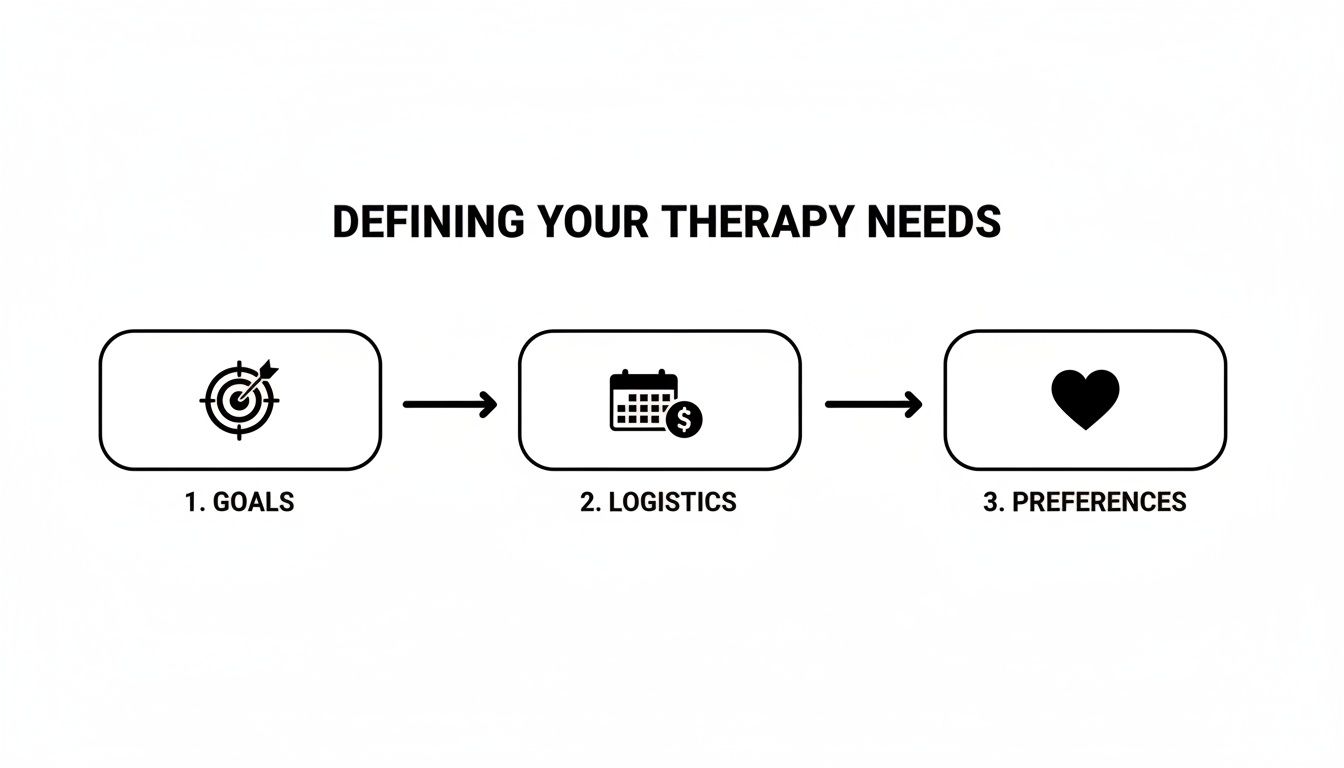
This flowchart breaks down the process of defining your therapy needs into three clear areas: your goals, the practical logistics, and your personal preferences.
Following these steps gives you a personalized roadmap, making your search for a therapist far more intentional and a lot less chaotic.
Sort Out the Practical Details
Beyond your emotional goals, the practical stuff plays a huge role in whether therapy will be sustainable for you. Figuring out the logistics now will save you a ton of frustration down the road.
Insurance and Budget Start with your insurance. Call the number on the back of your card or log into their online portal to get the specifics on your mental health benefits. You’ll want to know your copay, your deductible, and if you need a referral from your primary care doctor.
If you’re planning to pay out-of-pocket, figure out what you can realistically afford each month. Don’t be afraid to ask about this—many therapists offer sliding-scale fees, which means they adjust their rate based on your income.
Scheduling and Format Next, think about your schedule. Do you need evening or weekend appointments? Are you looking for a weekly session, or would bi-weekly work better?
You also need to decide between in-person and online therapy. Online sessions offer incredible flexibility, but some people find that meeting in a dedicated space away from home is more effective. There’s no right answer—just what works for you. The crucial role our mental care professionals play in your well-being often depends on finding a setup that fits seamlessly into your life.
Consider Your Personal Preferences
Finally, think about the kind of person you’d feel comfortable opening up to. Therapy is an incredibly personal relationship, and feeling a real sense of rapport is non-negotiable.
Ask yourself a few questions:
Gender: Do you have a preference for your therapist’s gender?
Age: Would you feel more comfortable with someone closer to your age, or someone with a bit more life experience under their belt?
Communication Style: Are you looking for someone who mostly listens and guides, or do you prefer a therapist who is more direct and action-oriented?
Cultural Background: Is it important that your therapist shares your cultural, racial, or spiritual background, or has a deep understanding of it?
Answering these questions helps you build a profile of your ideal therapist. It transforms what can feel like a massive, overwhelming search into a much more targeted and manageable process.
Discovering Where to Find Qualified Therapists
Alright, you’ve done the internal work and have a much clearer picture of what you need. Now it’s time to start the actual search.
The good news? You have more options at your fingertips than ever before. Gone are the days when your only choice was a single referral from your family doctor. Knowing where to look can turn what feels like an overwhelming task into an empowering process of finding a handful of great potential candidates.
This is where you shift from reflection to action. With your goals and practical needs in hand, you can tap into a mix of modern digital tools and old-school community resources to find professionals who genuinely align with what you’re looking for.
Harnessing the Power of Online Directories
Online therapist directories are easily one of the most powerful tools in your search today. Think of them as specialized search engines built specifically to connect you with a therapist, loaded with filters that let you slice through thousands of profiles to find a manageable few. In fact, over 80% of clients now start their therapy search online, making these platforms a critical first stop.
These directories allow you to filter by the things that matter most to you, like:
Location: Find clinicians near you for in-person sessions or those licensed in your state for virtual care.
Insurance: This is often the first box people check to make sure therapy is affordable from the get-go.
Specialty: Zero in on professionals who focus on anxiety, trauma, couples counseling, or your specific area of need.
Therapeutic Approach: If you’re set on a specific method like Cognitive Behavioral Therapy (CBT), you can find a specialist.
For example, if you’re looking for support with specific conditions like ADHD or Autism, certain resources are designed to help with finding a qualified CBT therapist who has that exact expertise. This level of detail is precisely what makes online directories so effective.
When you’re scrolling through a directory, don’t just stop at the headshot and credentials. Take a minute to read their personal statement. This is where a therapist’s personality, philosophy, and approach really come to life, giving you a much better feel for who they are as a person.
Beyond the big platforms, our sister site, Thera Connect, was created by Fitness Hacks For Life to help bridge the gap between clients and clinicians. It’s a community-first ecosystem built on trust, designed to connect you directly with licensed professionals who share our mission.
Exploring Your Existing Network and Community
While digital tools are fantastic, don’t forget about the resources already hiding in plain sight within your own network and community. Sometimes, the most solid referrals come from trusted, real-world connections.
A great place to start is your primary care physician. They usually have a network of mental health professionals they trust and can recommend someone who’s a good clinical fit based on your health history.
Another powerful—and often overlooked—resource is your Employee Assistance Program (EAP). Many companies offer EAPs as a free, confidential benefit that includes a certain number of therapy sessions. This can be an incredible way to get short-term support or a professional referral at absolutely no cost to you.
Finally, consider these community-based options:
University Counseling Centers: If there’s a local university with a psychology or counseling program, they might offer low-cost therapy to the public. These sessions are typically provided by graduate students who are supervised by licensed professionals.
Specialized Non-Profits: Organizations that focus on specific issues (like grief, addiction, or LGBTQ+ support) often provide their own counseling services or can refer you to providers they know and trust.
By combining these different avenues, you create a much stronger search strategy. Looking at online directories, checking your EAP, and exploring local resources casts a wider net. This approach dramatically increases your chances of finding not just any therapist, but a therapist who feels like the right partner for your journey.
Building this diverse list of potential candidates is the next concrete step toward getting the support you deserve. You can learn more about navigating these options in our guide to accessible mental health care.
You’ve got a list of potential therapists. Great. Now for the most critical part of the whole process: figuring out which one is the right person for you.
This isn’t about finding the single “best” therapist in the world. It’s about finding the person whose expertise, personality, and approach click with your specific needs. Think of it less like an exam and more like a series of low-key interviews. You’re not just hoping they’ll take you on as a client; you are actively choosing them, too.
You’re looking for a professional who makes you feel safe and understood enough to get into the real work.
Understanding Different Therapeutic Approaches
Walking into the world of therapy can feel like learning a new language. You’ll see a ton of acronyms and terms flying around—CBT, psychodynamic, somatic—and it can be overwhelming. You don’t need a Ph.D. in psychology, but having a basic handle on a few common methods can help you decipher a therapist’s profile and imagine what working with them might be like.
These different methods, or modalities, are just the frameworks therapists use to help you explore and heal.
To give you a head start, here’s a quick-reference table breaking down some of the most common therapeutic modalities you’ll encounter. It’s a simple guide to what each approach focuses on and the kinds of issues they are often used to address.
Comparing Common Therapeutic Approaches
Therapeutic Modality
Core Principle
Best For
Cognitive Behavioral Therapy (CBT)
Focuses on identifying and changing destructive thought patterns and behaviors in the present moment.
Remember, this is just a starting point. Many therapists are “eclectic,” meaning they blend different approaches to fit the client.
The connection you build with your therapist is often far more important than the specific modality they use. Study after study confirms that the therapeutic alliance—that bond of trust and collaboration between you and your clinician—is the single greatest predictor of a good outcome.
So, while understanding their approach is helpful, the real question is whether their style and personality feel like a match for yours.
What to Look For in a Therapist’s Profile
A therapist’s online profile is their professional front door. It’s their chance to give you a glimpse of who they are and how they practice. When you’re scrolling through directories or their personal websites, look beyond the basics like location and insurance.
Pay close attention to the language they use. Does their bio sound warm and inviting, or is it overly clinical and academic? Their choice of words can tell you a lot about their personality.
Also, notice their credentials—those letters after their name (like Ph.D., LCSW, or LMFT) signify their specific training and license. If you’re curious about what all those letters mean, our guide can help you decode them: What Do the Letters After a Psychologist’s Name Actually Mean?.
The Importance of Cultural Competence
Finding a therapist who “gets you” is about more than just sharing hobbies. It means finding someone who understands and respects the unique fabric of your identity.
Cultural competence is a therapist’s ability to work effectively with people from backgrounds different from their own. This includes your race, ethnicity, sexual orientation, gender identity, religion, disability, and socioeconomic status.
A culturally competent therapist will:
Avoid making assumptions about your life based on your identity.
Remain open and curious to learn about your cultural background.
Acknowledge how systemic issues like racism and homophobia can impact mental health.
Create a space where you can talk about all parts of who you are without fearing judgment.
You have every right to want a therapist who shares your background if that’s what feels most affirming and safe for you. Sadly, traditional referral paths don’t always meet these diverse needs. In 2021 alone, over 57 million American adults were living with a mental illness, yet a huge number of them never get professional help. Finding a clinician who truly understands your cultural context can be a powerful factor in closing that gap.
Making First Contact and What to Ask
You’ve done the research and have a shortlist of potential therapists. Now comes the part that trips a lot of people up: actually reaching out. It’s completely normal to feel a wave of anxiety at this stage, but I promise it doesn’t have to be complicated or scary.
Think of this initial contact as a brief, low-pressure introduction. You’re not committing to anything. You’re just gathering a bit more information and getting a feel for their personality to see if you two might click.
Crafting Your First Email
For many of us, sending an email feels much more manageable than picking up the phone. It gives you the space to organize your thoughts and say exactly what you mean without the pressure of a live conversation.
The goal here is to be concise. You absolutely do not need to pour out your life story in this first message. Just give them enough context to know what you’re looking for and whether they’re the right person to help.
Here’s a simple, effective script you can adapt. I’ve seen it work time and time again.
Subject: Inquiry About New Client Openings
Hello Dr. [Therapist’s Last Name],
My name is [Your Name], and I found your information on [Psychology Today, your website, etc.]. I’m looking for a therapist to help me navigate [mention 1-2 key issues, like “anxiety and relationship challenges” or “grief and career stress”].
Your profile mentioned a specialization in [mention their approach, e.g., EMDR or Acceptance and Commitment Therapy], and I’m interested in learning more about how you work with clients.
I have [Your Insurance Provider, e.g., Aetna] or I’ll be paying out-of-pocket. Could you let me know if you are currently accepting new clients? I’d also appreciate the chance for a brief consultation call if you offer one.
Thank you, [Your Name] [Your Phone Number]
This email is perfect because it’s direct, gives them all the key details, and proposes a clear next step. It shows you’ve done your homework while respecting their time.
Getting Ready for the Consultation Call
Most therapists offer a free 15-20 minute consultation call. This is your shot to ask questions, check out their communication style, and just see if you feel a comfortable rapport. Don’t waste it.
Going into this call with a few questions ready will make a world of difference. The goal isn’t to grill them, but to start a real conversation that helps you decide if their style fits what you need.
Here are the key things you want to get straight:
Logistics: Confirm their session fees, if they take your insurance (and are in-network), and what their schedule looks like.
Experience: Ask specifically about their work with people dealing with similar issues to yours.
Approach: Try to get a sense of what a therapy session with them would actually feel like.
Remember, this is a two-way street. You are interviewing them just as much as they are assessing if they can help you.
Insightful Questions to Ask Your Potential Therapist
It’s so easy to get on the phone and completely blank on what you wanted to ask. I always recommend jotting down a few questions beforehand. Move beyond the basics to get at the heart of their therapeutic style.
Questions About Their Experience and Approach:
Based on the little I’ve shared, how might you approach working with me?
Can you tell me more about your experience with [your specific concern, e.g., complex trauma, OCD]?
How do you structure your sessions? Are they goal-oriented and structured, or more open and client-led?
Questions About the Therapeutic Relationship: 4. If I were to ask your former clients to describe you, what would they say? 5. How important is the therapist-client relationship in your view of the healing process? 6. How do you and your clients track progress?
Pay attention to how they answer as much as what they say. Do they sound warm and engaged? Do you feel like they’re actually listening?
Trust your gut. Finding the right therapist is deeply personal. If the conversation flows and you feel a sense of ease, that’s a fantastic sign you might have found your person.
Navigating the Costs of Therapy
Let’s just get this out of the way: therapy can be expensive. For many people, the potential cost is a huge barrier that stops them from even starting the search for help. But it absolutely does not have to be the end of the story.
There are more pathways to affordable, high-quality care than you might think. It’s not about finding the cheapest option; it’s about finding sustainable, professional support that actually fits your budget. You just have to know where to look and what questions to ask.
And if you’re worried about cost, you’re far from alone. Over 1 billion people worldwide are living with a mental health condition, but the gap between needing help and getting it is staggering. Globally, fewer than 7% of people with a mental health or substance use disorder receive what’s considered effective treatment. That means for every ten people who could use support, eight or nine are trying to manage on their own. You can find more details on these statistics directly from the World Health Organization.
Look for Sliding-Scale Fees
One of the best ways to make therapy fit your budget is to find a therapist who offers a sliding scale. This is just a flexible payment model where your session fee is based on your income. It’s designed specifically to make therapy accessible, no matter what you earn.
You might be surprised how many private practice therapists set aside a few spots in their schedule for sliding-scale clients. They don’t always advertise it on the front page of their website, so you often just have to ask.
It doesn’t have to be an awkward conversation. When you reach out for an initial consultation, you can simply ask:
“I’m really interested in your work, but I have a limited budget. Do you offer any sliding-scale or reduced-fee spots?”
“Could you tell me if you have a sliding scale and what that range looks like?”
Most therapists who offer this are incredibly understanding. The process is usually straightforward and is meant to find a fee that feels manageable for you and fair to them.
Tap Into Community and University Resources
Some of the most affordable—and still very high-quality—options are hiding in plain sight, right in your local community.
Community Mental Health Clinics These clinics are often funded by local government or non-profits with the sole mission of serving the community. They almost always operate on a sliding scale that can go quite low, making them a fantastic resource for consistent, long-term care. The only catch is that they can sometimes have a waitlist, but it’s always worth checking.
University Training Programs Got a university nearby with a graduate program in psychology, counseling, or social work? Check if they have a training clinic. You can get therapy from graduate students who are in the final stages of their training and are working toward licensure.
Don’t let the word “student” throw you. Every single session is closely supervised by a licensed, seasoned clinical professor. You’re essentially getting two clinical minds focused on your well-being, often for a tiny fraction of the cost of a private practitioner.
Get Smart About Your Insurance
If you have health insurance, digging into your benefits can unlock huge savings. It’s about knowing the difference between in-network and out-of-network providers.
In-Network vs. Out-of-Network
In-Network: These therapists have a direct contract with your insurance company. You’ll usually pay a simple, fixed copay for each session once you’ve met your deductible.
Out-of-Network (OON): These therapists don’t have a contract with your insurance. This means you pay their full fee upfront, but your insurance company will then reimburse you for a percentage of that cost—often 50-80%.
A lot of people hear “out-of-network” and immediately write it off as too expensive or complicated, but that can be a mistake. Going OON can dramatically expand your options, giving you access to a much wider pool of therapists with different specialties.
If you find a therapist you really connect with but they don’t take your insurance, ask them if they provide a “superbill.” This is just a detailed receipt you send to your insurance company to get your reimbursement. It’s a seriously underutilized tool for making the therapist you really want to see much more affordable.
Common Questions About Finding a Therapist
Starting the search for a therapist brings up a ton of questions. That’s completely normal. You might feel a mix of hope and a whole lot of uncertainty, and that’s okay. Let’s walk through some of the most common questions to give you a bit more clarity and confidence.
Remember, you’re not just looking for any professional with a degree. You’re looking for an ally, someone who can guide you through some deeply personal stuff. Nailing down the practical details first makes the whole process feel less overwhelming.
How Do I Know It’s the Right Time for Therapy?
This is probably the biggest question people have: “Do I really need this?” The honest answer is there’s no perfect time, but your own life will give you pretty clear signals when therapy could make a real difference.
You don’t have to be at rock bottom to get help. In fact, getting support before you hit a crisis point can be incredibly powerful. It might be time to reach out if you’re noticing:
Feelings that won’t quit: A lingering sadness, anxiety, or irritability that’s starting to get in the way of your day-to-day life.
Friction in your relationships: Maybe you’re fighting more with your partner, pulling away from friends, or just can’t seem to connect with the people you care about.
Stress that feels crushing: When work, family, or just life in general feels like it’s too much to carry on your own.
A general sense of being ‘stuck’: You want to grow, understand your own patterns, or build healthier habits, but you just don’t know how to start.
Ultimately, you have to trust your gut. If a little voice inside is even whispering that you could use some support, that’s more than enough reason to start looking.
What’s the Difference Between All the Credentials?
Once you start looking at therapist profiles, you’ll see a jumble of letters after their names—LCSW, LMFT, Ph.D., LPC. It can feel like alphabet soup. While they all mean the person is a licensed professional, their training and focus can be a little different.
Here’s a quick and dirty guide to what some of them mean:
Credential
Title(s)
Typical Focus
Ph.D./Psy.D.
Psychologist
Often have deep training in psychological testing, research, and a wide range of therapy approaches.
LCSW/MSW
Licensed Clinical Social Worker
Trained to see the whole picture, focusing on how your environment and social factors impact your mental health.
LPC/LMHC
Licensed Professional Counselor
Specifically trained in counseling techniques to help with a broad spectrum of emotional and behavioral challenges.
LMFT
Licensed Marriage and Family Therapist
Experts in relationship dynamics, whether it’s with couples, families, or other relational systems.
Here’s the most important thing to remember: the letters aren’t nearly as important as the therapist’s actual experience with your specific issues and how you feel when you talk to them. Decades of research have shown that the therapeutic alliance—the bond between you and your therapist—is the single biggest predictor of success in therapy.
What Is the First Session Actually Like?
The thought of that first appointment can be really nerve-wracking. People often imagine lying on a couch being analyzed, but it’s usually much more relaxed and conversational than that.
Think of it as a get-to-know-you meeting. Your therapist wants to hear your story, understand what brought you in, and figure out if they have the right skills to help you. They’ll likely ask about your background, what you’re struggling with right now, and what your goals are.
But it’s a two-way street. This is your chance to interview them, too. Do you feel like they’re really listening? Do you like their communication style? Does it feel like a space where you could eventually open up?
When Is It Okay to Change Therapists?
It is always okay to change therapists. Full stop.
This isn’t like breaking up with a friend; it’s about advocating for your own health. Therapy is a huge investment of your time, money, and emotional energy, and you deserve to work with someone who is a good fit.
Sometimes a therapist is a great person, just not the right person for you. Other times, you might see some genuine red flags that tell you it’s time to move on, like:
You consistently feel judged, unheard, or dismissed.
The therapist talks about themselves way too much.
They have poor boundaries (e.g., trying to be your friend, being late all the time).
Months go by and you feel like you aren’t making any progress at all.
You aren’t locked in with the first therapist you meet. Learning to trust your instincts and find the right support is a huge, empowering part of the process itself.
At Fitness Hacks For Life, we believe that finding the right support is a crucial step toward well-being. Our mission is to provide accessible resources and clear pathways to care, so no one has to navigate their mental health journey alone. Explore our guides and community at https://fitnesshacksforlife.org.
Frequently Asked Questions:
How Do I Know It’s the Right Time for Therapy?
There’s no perfect moment, but clear signs include persistent feelings (sadness, anxiety, irritability) interfering with daily life, relationship friction, overwhelming stress, or feeling “stuck” despite wanting growth. You don’t need to hit rock bottom—trust your gut if a voice inside suggests you could use support. Starting early can be very powerful.
What’s the Difference Between All the Credentials?
Common ones include:
1. Ph.D./Psy.D. (Psychologist): Deep training in testing, research, and various therapy approaches. 2. LCSW (Licensed Clinical Social Worker): Focus on environment, social factors, and a holistic view. 3. LPC/LMHC (Licensed Professional Counselor): Broad counseling for emotional/behavioral issues. 3. LMFT (Licensed Marriage and Family Therapist): Specializes in relationships and family dynamics.
The letters matter less than their experience with your issues and the connection (therapeutic alliance) you feel—that’s the biggest predictor of success.
What Is the First Session Actually Like?
It’s usually relaxed and conversational (not like the stereotypical couch analysis). It’s a mutual get-to-know-you: they’ll ask about your background, current struggles, and goals, while you assess if they listen well, match your style, and create a safe space. Treat it as an interview both ways.
When Is It Okay to Change Therapists?
Always—it’s 100% okay and often necessary. You’re investing time, money, and energy, so you deserve a good fit. Switch if you feel judged/unheard, they overshare or have poor boundaries, or you see no progress after months. Trusting your instincts here is empowering.
How important is the therapist’s fit vs. credentials?
Credentials get them licensed, but the real key is their experience with your specific concerns + the bond you build. Research consistently shows the therapeutic relationship is the top factor in successful outcomes—prioritize feeling heard and comfortable over just the letters after their name.
Thera Connect
Sister site of Fitness Hacks for Life
Join Our Mission
We come from non-profit roots with an engaged community at Fitness Hacks for Life. Now we’ve created our sister site, Thera Connect, to expand our impact. We’re building something meaningful, and we’re asking you to join us.