
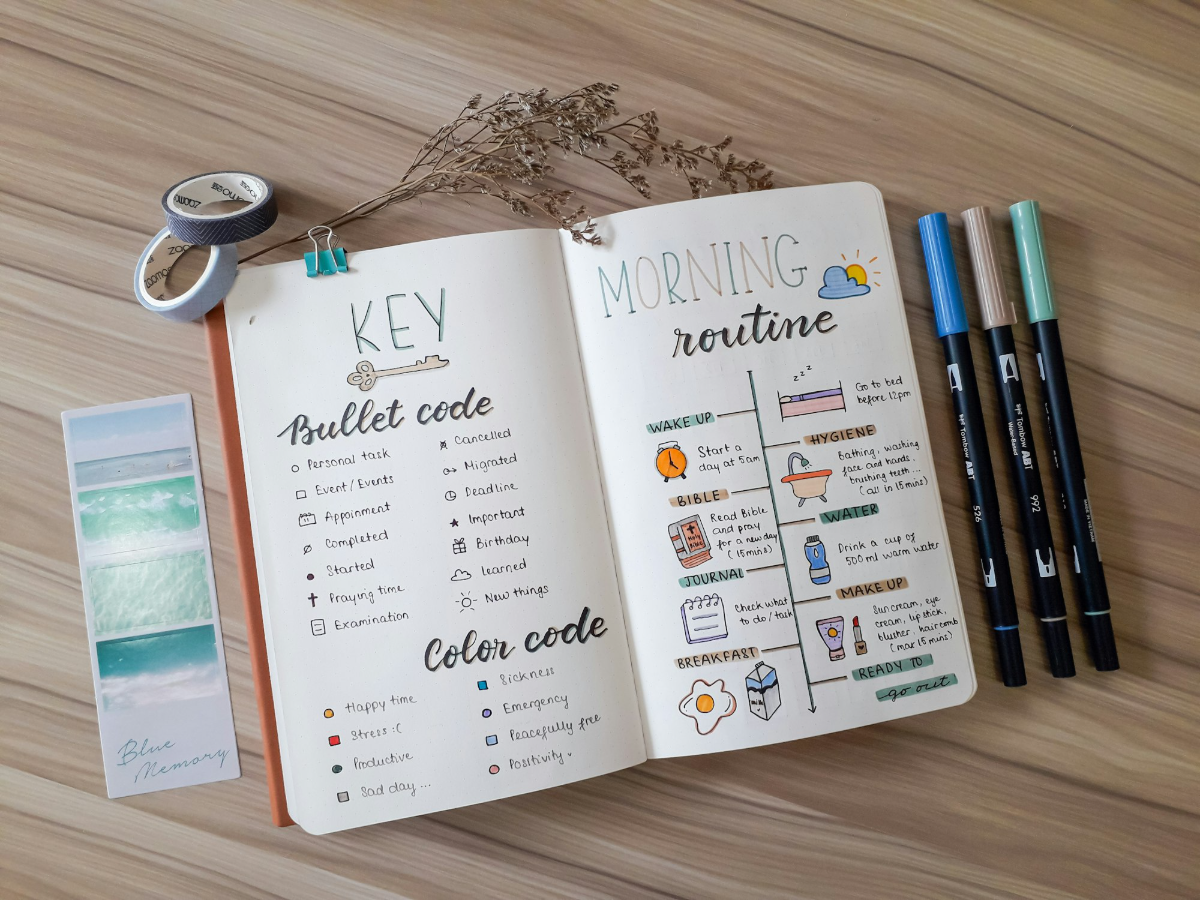
Your morning might look like hitting snooze twice and inhaling coffee on the way out the door — or it might involve a sunrise workout and a slow, intentional start. Either way, you probably have some kind of routine. And it turns out those small, repeated patterns are doing more for your mind and body than you might think.
Routines Quiet the Mental Noise
A big part of why routines help is what they take off your plate. When a task becomes habitual, you stop spending mental energy remembering it, scheduling it, or deciding whether to do it — you just do it. That freed-up bandwidth is a real stress reducer.
This shows up in the research: studies on families during the pandemic found that kids with consistent routines had higher emotional well-being, and their parents reported lower anxiety. Simple end-of-day habits — laying out clothes, prepping meals, glancing at tomorrow’s schedule — can measurably lower next-morning anxiety. The effect isn’t just short-term, either: one study tracked infants with regular routines and found reduced anxiety levels persisting into their school-age years.
Routines Help You Sleep — Even the Daytime Ones
Yes, a wind-down routine (shower, herbal tea, reading) helps you fall asleep. But your daytime consistency matters just as much. Research links stable daily routines to lower insomnia rates, faster sleep onset, and better sleep efficiency — particularly in older adults.
One study comparing solid sleepers to people with insomnia found the insomnia group had noticeably less regular daily activity patterns, suggesting routines help regulate the body’s internal clock. Keeping consistent sleep and wake times — not just what you do before bed — is one of the most agreed-upon recommendations across sleep science.
Routines Free Up Your Brain for the Hard Stuff
When your brain isn’t spending energy on recurring decisions, it has more room for creativity and complex problem-solving. That’s not just a feel-good idea — it’s backed by cognitive research showing that habitual tasks reduce the mental load needed to complete them, reserving focus for things that actually require it.
Routines also appear to build resilience. Research from the pandemic era found that people with steady daily routines showed stronger “cognitive adaptation” — the ability to shift problem-solving strategies as situations changed. The flip side was true too: people whose routines were disrupted reported more distress when facing setbacks, and were more likely to struggle with anxiety and depression.
Building a Routine That Actually Sticks
The goal isn’t a rigid, identical schedule every day — it’s structure that flexes with you.
1. Design around different kinds of days. Weekday mornings might be built for efficiency; weekends can be slower and more spontaneous. There’s no single “correct” routine — only one that fits your actual life.
2. Get clear on your goal first. Better sleep, more movement, deeper friendships, more organization — each of these needs a different routine. Start by naming what you’re actually trying to build toward.
3. Remove your own roadblocks before you start. Do you need help freeing up time? Equipment? A better time of day? Clearing obstacles before you begin dramatically raises your odds of sticking with it.
4. Start small — smaller than you think. If your goal is a morning workout and you’re not a morning person, don’t start with a 6 a.m. gym session. Start with one walk a week. Build from there. Bring a friend along, or just have someone cheering you on — accountability makes consistency easier.
Routines aren’t about boxing yourself in. They’re a framework that holds space for the things that matter to you — so your mind has less to manage and more room to actually be present.
Leave a Reply