Our free blog posts and printable workbooks are a powerful starting point for mental wellness. But sometimes — especially when you are dealing with narcissistic abuse, trauma, significant anxiety, or deep grief — the most important thing you can do is work with a licensed professional.
That is where TheraConnect comes in.
TheraConnect is our partner mental health directory — built to make it easy to find a licensed therapist or coach who fits your needs, your schedule, and your budget. ✓ Search by specialty, location, and insurance ✓ Many providers offer sliding scale fees ✓ In-person and online sessions available ✓ Providers specializing in narcissistic abuse, anxiety, trauma, relationships, and more
Find a Licensed Therapist → theraconnect.net
When Self-Help Tools Are Not Enough
Our workbooks and blog posts are designed to support your mental wellness journey. But they are not a replacement for professional care. Here are signs it may be time to work with a therapist:
Your anxiety, depression, or trauma symptoms are significantly affecting your daily life
You are recovering from narcissistic abuse, gaslighting, or a toxic relationship and feel stuck
You have tried self-help approaches and are not seeing progress
You are experiencing intrusive thoughts, panic attacks, or hypervigilance
You feel like you need someone to talk to who truly understands what you are going through
You want guided, professional support alongside your self-directed work
Seeking therapy is not a sign that the workbooks did not work. It is a sign that you are taking your healing seriously and giving it everything you have.
Why TheraConnect
Nationwide directory of licensed therapists, counselors, psychologists, and certified coaches
Specialties include narcissistic abuse recovery, anxiety, trauma, depression, relationships, grief, social anxiety, and life transitions
Filter by insurance — many plans cover therapy at the same rate as a regular doctor’s visit
Sliding scale fees available — therapy starting as low as $40 per session for eligible clients
In-person and virtual sessions — find what works for your schedule and comfort
Detailed profiles with photos, bios, and approach so you can find the right fit
Browse Therapists and Coaches → theraconnect.net
How to Find the Right Therapist
Finding the right therapist takes a little research but is one of the most worthwhile investments you can make in yourself. Here is a simple process:
STEP 1 — Know what you are looking for What are you dealing with? Anxiety, trauma, narcissistic abuse, grief, relationships? Having a general sense of direction helps you find someone whose expertise matches your needs. STEP 2 — Check your insurance Call the member services number on your insurance card and ask: Does my plan cover outpatient mental health? What is my copay? Are there in-network providers near me? STEP 3 — Search TheraConnect Go to theraconnect.net and filter by specialty, location, and insurance. Read profiles carefully — the right fit matters as much as credentials. STEP 4 — Book a consultation Most therapists offer a free 10–20 minute consultation call. Use it to ask questions and assess whether you feel comfortable. STEP 5 — Start The first session is simply a conversation. You do not need to have everything figured out before you begin.
Start Your Search → theraconnect.net
Frequently Asked Questions
How much does therapy cost?
Therapy costs vary widely. With insurance, you may pay as little as $20–$40 per session once your deductible is met. Without insurance, many therapists on TheraConnect offer sliding scale fees based on your income — some starting as low as $40 per session. You can filter by budget on TheraConnect to find options that work for you.
What if I have never been to therapy before?
That is completely fine. Most therapists are experienced at working with first-time clients. The first session is about getting to know each other — your history, what brought you to therapy, and what you are hoping to work on. You do not need to have anything prepared. You just need to show up.
What is the difference between a therapist and a life coach?
A licensed therapist is trained and credentialed to treat mental health conditions including anxiety, depression, trauma, and PTSD. A life coach supports personal development, goal setting, and life transitions but is not a licensed clinical professional. For significant mental health concerns, a licensed therapist is the recommended starting point. TheraConnect lists both so you can find the right type of support for your needs.
Can I do therapy online?
Yes. Research shows online therapy is as effective as in-person therapy for most mental health concerns. Many people find it more accessible — no commute, no parking, and the comfort of being in your own space. TheraConnect lists providers who offer virtual sessions.
What if the first therapist I try is not the right fit?
It is completely normal to try more than one therapist before finding the right match. The therapeutic relationship is one of the strongest predictors of good outcomes — if it does not feel right, try someone else. There is no obligation to continue with a therapist who does not feel like a good fit.
Our Free Resources — Use These Too
While you are finding a therapist, our free blog posts and affordable workbooks can support your healing journey. Everything on our blog is always free. Our printable workbooks start at $7.
Every product in our shop is a printable PDF — instant download, print at home, or use on your iPad or tablet. Each one is written by our mental wellness team and grounded in evidence-based approaches including Cognitive Behavioral Therapy (CBT).
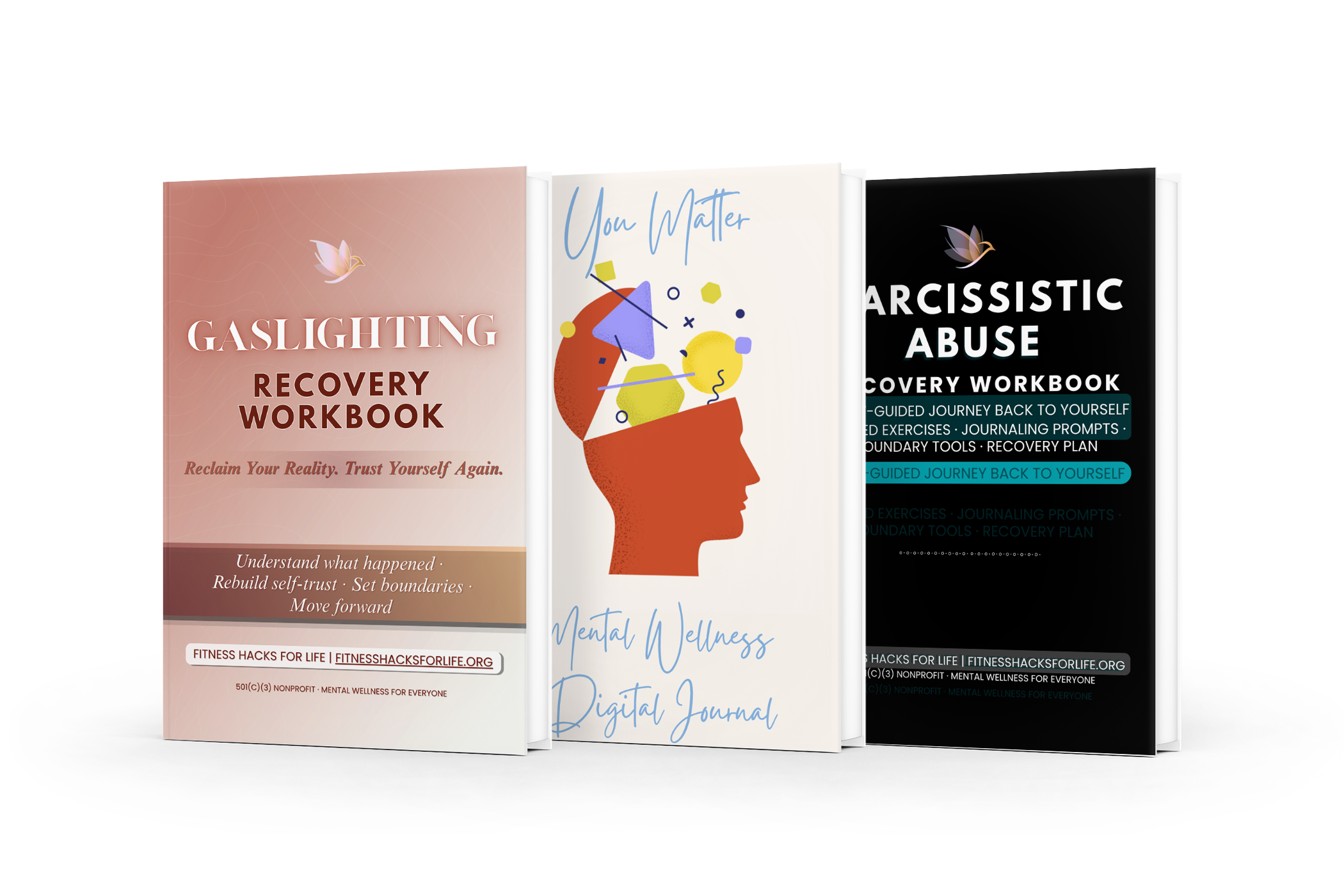
Narcissistic Abuse and Toxic Relationship Recovery Workbooks
Our most in-depth workbooks are written for survivors of narcissistic abuse, gaslighting, and toxic relationships. If you have been searching for a narcissistic abuse recovery workbook or a gaslighting recovery workbook, these were made for you.
50 pages of guided prompts to help you understand what happened, break the trauma bond, grieve the relationship, reclaim your identity, and build forward. Covers love bombing, gaslighting, the discard cycle, grief, anger, and rebuilding self-trust.
What is inside: What happened · Trauma bonding · The tactics · Grief · Reclaiming reality · Rebuilding identity · Moving forward
50 pages to help you reclaim your reality after gaslighting. Understand what was done to you, rebuild trust in your own perceptions and memory, and find your voice again.
What is inside: What gaslighting is · The damage it causes · Reclaiming your reality · Rebuilding self-trust · Healing and moving forward
50 pages for recovering from any toxic relationship — not just narcissistic ones. Covers the full recovery arc from recognizing the toxicity through grief, healing, and rebuilding.
What is inside: Recognizing toxicity · The relationship dynamic · Leaving · Grief · Healing the damage · Rebuilding · Moving forward
Our anxiety workbooks use Cognitive Behavioral Therapy (CBT) techniques — the same evidence-based approach used by licensed therapists. If you have been looking for an anxiety workbook printable or CBT workbook for anxiety, these are built for real, lasting relief.
CBT-based tools for understanding and managing anxiety. Includes trigger tracking, thought challenging, grounding techniques, and a personal anxiety management plan. Evidence-based and practical.
What is inside: Understanding anxiety · CBT techniques · Trigger tracking · Grounding methods · Your personal plan
50+ pages for building genuine, lasting calm. Goes deeper than surface-level stress relief — covers emotional patterns, letting go of what you cannot control, setting protective boundaries, and building a daily peace practice.
What is inside: Emotional balance · Stress relief · Letting go · Boundary work · Daily peace practice
A structured, compassionate guide to understanding your social anxiety, challenging the thoughts behind it, and building confidence one step at a time.
What is inside: Understanding social anxiety · CBT tools · Avoidance patterns · Confidence building · Moving forward
Our boundaries and self-worth tools are among our most popular. If you have been searching for a setting boundaries workbook or a self-esteem journal printable, these were designed for that work.
Setting Boundaries Workbook — $14.99
50 pages of guided prompts for setting and holding boundaries in every area of your life — relationships, family, work, friendships, toxic people, and with yourself. Includes scripts for every situation.
What is inside: Relationships · Family · Work · Friendships · Narcissists and toxic people · Self boundaries · Scripts
Guided daily prompts to rebuild your self-worth, challenge negative self-talk, and develop a healthier and more compassionate relationship with yourself. The most accessible entry point in our shop.
What is inside: Recognizing your worth · Challenging negative beliefs · Daily confidence prompts · Self-compassion
120 printable affirmation cards for self-love, confidence, anxiety relief, morning mindset, and healing. Print and cut at home or save to your phone. One for every kind of day.
What is inside: Self-love · Confidence · Anxiety relief · Morning mindset · Healing affirmations
Our breakup recovery tools are for anyone navigating the end of a relationship — whether it was a toxic relationship, a long-term partnership, or something in between.
Our daily wellness tools help you build the consistent habits that support your mental health — tracking mood, sleep, movement, and intention every day.
Daily structured prompts for shifting out of negative thought loops, cultivating gratitude, and starting each day with intention. A gentle daily practice for a more positive and grounded mindset.
What is inside: Daily reflection prompts · Gratitude practice · Mindset shifts · Morning intention setting
A printable health and fitness planner that keeps your mental health in the picture. Track workouts, sleep, mood, and wellness goals together — because your body and mind are not separate.
What is inside: Workout tracking · Sleep log · Mood tracking · Wellness goals · Rest day planning
All products are digital downloads. Due to the nature of digital files, all sales are final — no refunds. Questions? Email us at hello@fitnesshacksforlife.org before buying.
Frequently Asked Questions
What are printable mental health workbooks?
Printable mental health workbooks are PDF guides filled with structured prompts, exercises, and tools for working through specific mental health challenges — such as anxiety, narcissistic abuse recovery, or building self-esteem. You download them instantly, print at home, and work through them at your own pace. They are not a replacement for therapy but a powerful self-directed complement to it.
How do I receive my download after purchasing?
Immediately after purchase on Ko-fi, you will receive a download link by email. Click the link to download your PDF. If you do not see the email within a few minutes, check your spam or promotions folder.
Can I print these at home?
Yes. All of our workbooks and journals are designed to print at home on standard 8.5 x 11-inch letter-size paper. A black-and-white printer works perfectly. Color printing is optional.
Can I use these on my iPad or tablet without printing?
Yes. Download the PDF and open it in any PDF reader app — GoodNotes, Notability, Adobe Acrobat, or your device’s built-in PDF viewer. You can type or handwrite directly into the file on any touchscreen device.
Do I need a Ko-fi account to purchase?
No. You can purchase as a guest on Ko-fi without creating an account. You will need to provide an email address to receive your download link.
Are these therapist-written?
Our workbooks are created by our mental wellness team and grounded in evidence-based approaches including Cognitive Behavioral Therapy (CBT). They are not a replacement for professional therapy. If you are dealing with significant mental health challenges, we encourage you to also seek support from a licensed therapist — you can find one at theraconnect.net.
Which workbook should I start with?
It depends on what you are dealing with right now. Recovering from a narcissistic relationship — start with the Narcissistic Abuse Recovery Workbook. Anxiety is your main focus — start with the Anxiety Workbook. Working on self-esteem — the Self Esteem Journal at $7 is the most accessible starting point. Not sure — read our free blog posts first, and they will point you in the right direction.
What is the difference between the Narcissistic Abuse Recovery Workbook and the Toxic Relationship Recovery Workbook?
The Narcissistic Abuse Recovery Workbook is specifically for people recovering from a relationship with a narcissist — it covers the specific tactics used, including love bombing, gaslighting, and the discard cycle. The Toxic Relationship Recovery Workbook is broader — it covers any toxic relationship and works through the full recovery arc. Many people find both useful at different stages.
Need Professional Support Alongside These Tools?
Our workbooks are a powerful starting point. For significant mental health challenges — particularly narcissistic abuse recovery, trauma, or clinical anxiety — working with a licensed therapist can make an enormous difference.
Our sister site TheraConnect connects you with licensed therapists and coaches who specialize in anxiety, narcissistic abuse recovery, relationships, and more — with sliding scale options so cost is never a barrier.
It’s one of the loneliest feelings in a marriage: lying next to someone every night who won’t let you in. You’re not asking for much — just to feel known, to feel like you’re facing life together. But every time you try to go deeper, he goes quiet, gets defensive, or finds a way to end the conversation before it starts.
Understand What You’re Actually Dealing With
Before deciding what to do, it helps to understand which category your husband falls into:
Category 1: He wants to connect but doesn’t know how. Most common. He wasn’t taught emotional language and finds feelings discussions uncomfortable.
Category 2: He’s aware of the problem but resistant to changing it. He knows you want more depth but isn’t interested in providing it.
Category 3: The emotional unavailability is part of a controlling pattern. Silence and stonewalling are being used deliberately to avoid accountability.
What Not to Do
Don’t pursue harder when he shuts down — the more you push, the more he retreats. Don’t have the conversation when you’re already in conflict. Don’t frame it as something wrong with him. Don’t set and immediately abandon boundaries.
What to Do Instead
Name your need without blame: ‘I need to feel connected to you. I miss feeling close. Can we find a way to work on that together?’ This positions it as something to build together, not a verdict on his failure.
Choose your timing carefully — after dinner, on a walk, at a relaxed moment. Start smaller than you think you need to.
The Role of Couples Therapy
If direct conversations haven’t worked, couples therapy isn’t a last resort — it’s often the most efficient path forward. Many men who resist emotional conversation with their partners find it easier in a therapeutic setting. The research on couples therapy outcomes is genuinely encouraging.
When to Reconsider What You’re Accepting
There’s a point — and only you know where it is — where working harder on connection stops being love and starts being a way of avoiding a harder truth.
If your husband is unwilling to work on the marriage, dismisses your needs as unreasonable, or uses emotional withdrawal as punishment — you deserve to have that acknowledged for what it is.
At the beginning of some relationships, attention and affection can feel overwhelming in a positive way. A partner may shower someone with compliments, constant messages, expensive gifts, or promises about the future. While this intense attention can feel romantic, it can sometimes be a form of manipulation known as love bombing.
Love bombing is a behavior commonly discussed in relationship psychology and is often associated with narcissistic personality traits. It involves overwhelming someone with affection and attention in order to quickly gain emotional influence or control.
Understanding how love bombing works can help people recognize unhealthy relationship patterns and protect their emotional well-being.
What Is Love Bombing?
Love bombing refers to excessive displays of affection, attention, or praise used to influence another person emotionally. The goal is often to create rapid emotional attachment so the person becomes dependent on the relationship.
Psychologists explain that love bombing may be used by individuals with narcissistic traits who seek admiration and control within relationships. According to the Cleveland Clinic, narcissistic behavior can include patterns of manipulation, entitlement, and a need for constant validation.
While intense affection is not always harmful, it becomes concerning when it is followed by manipulation, criticism, or emotional withdrawal.
Why Narcissists Use Love Bombing
People with narcissistic tendencies often crave admiration and attention. Love bombing can serve as a strategy to quickly create emotional closeness and trust.
Once the relationship is established, the dynamic may shift. Some individuals move from intense affection to criticism or emotional distance, creating confusion for their partner.
Mental health experts note that narcissistic relationship cycles often include stages of idealization, devaluation, and emotional withdrawal. This pattern can make it difficult for someone to recognize manipulation.
Signs of Love Bombing
Recognizing the early signs of love bombing can help people avoid unhealthy relationship dynamics.
1. Excessive Compliments
The person may constantly praise you or say things that feel unusually intense for a new relationship.
2. Constant Communication
Frequent messages, calls, or attention may create pressure to respond or remain connected at all times.
3. Grand Romantic Gestures
Lavish gifts or dramatic declarations of love may appear very early in the relationship.
4. Rapid Emotional Commitment
The person may talk about long-term plans, such as living together or marriage, very quickly.
5. Pressure for Immediate Intimacy
They may push for emotional closeness before trust has naturally developed.
These behaviors may initially feel flattering but can become concerning if they lead to emotional control or manipulation.
The Cycle After Love Bombing
In some unhealthy relationships, love bombing is followed by changes in behavior. Once emotional attachment is established, the person may begin to criticize, withdraw attention, or create emotional instability.
This shift can cause confusion because the relationship started with intense affection. Some people may attempt to regain the early attention by tolerating unhealthy behavior.
Relationship psychologists often describe this pattern as part of the narcissistic relationship cycle, which may include:
idealization
emotional manipulation
criticism or blame
emotional withdrawal
How to Protect Yourself from Love Bombing
Recognizing manipulation early can help protect emotional well-being. Some helpful strategies include:
taking relationships slowly
paying attention to consistent behavior over time
maintaining personal boundaries
seeking advice from trusted friends or professionals
Healthy relationships usually develop gradually and include mutual respect, communication, and emotional stability.
When to Seek Support
If someone feels emotionally overwhelmed or manipulated in a relationship, professional guidance may help. Mental health professionals can provide support for recognizing unhealthy patterns and building healthy boundaries.
Individuals looking for professional guidance may explore resources such as TheraConnect, which helps connect people with mental health providers.
Final Thoughts
Love bombing can feel exciting at the beginning of a relationship, but it may also be a warning sign of manipulation when it is used to gain emotional control. Recognizing these behaviors early can help individuals make informed decisions about their relationships and protect their emotional well-being.
Healthy relationships develop through trust, respect, and genuine emotional connection rather than overwhelming displays of affection.
If your thoughts feel overwhelming or your anxiety spikes out of nowhere, you’re not alone.
The 5-4-3-2-1 anxiety technique is one of the simplest and most effective grounding exercises you can use to calm your mind—anytime, anywhere.
It works by helping you reconnect with the present moment instead of getting stuck in anxious thoughts.
What Is the 5-4-3-2-1 Anxiety Technique?
The 5-4-3-2-1 method is a grounding technique that uses your five senses to bring your focus back to the present.
Instead of trying to “stop” anxiety, it gently shifts your attention away from racing thoughts and into your surroundings.
This makes it especially helpful for:
Anxiety attacks
Overthinking
Panic symptoms
Stress and overwhelm
How to Do the 5-4-3-2-1 Method (Step-by-Step)
👀 5 Things You Can See
Look around and name five things you can see.
It could be:
A light
A plant
Your phone
A texture on the wall
The goal is simple awareness—not perfection.
4 Things You Can Feel
Focus on physical sensations.
Examples:
Your feet on the ground
The fabric of your clothes
The temperature of the air
3 Things You Can Hear
Listen carefully.
You might notice:
A fan
Birds outside
Background noise
2 Things You Can Smell
If nothing is obvious, think of scents you enjoy.
Examples:
Coffee
Soap
Fresh air
1 Thing You Can Taste
Focus on a taste in your mouth or take a sip of something.
Even subtle awareness works.
Why the 5-4-3-2-1 Technique Works
Anxiety pulls you into the future
“What if something goes wrong?”
This technique brings you back to now.
By engaging your senses, your brain:
Slows down racing thoughts
Reduces panic signals
Regains a sense of control
When to Use This Technique
You can use the 5-4-3-2-1 method:
During an anxiety attack
Before sleep
In stressful situations
When you feel overwhelmed
Anytime your thoughts feel out of control
Tips to Make It More Effective
Speak the items out loud (or in your head)
Take slow breaths while doing it
Don’t rush—go at your own pace
Practice even when you’re calm
📘Want More Simple Anxiety Tools?
If this helped, you’ll love our guided mental health tools.
👉 Download a self-care workbook with calming exercises, journaling prompts, and daily routines designed to reduce anxiety and help you feel more in control.
❓ FAQ
What is the 5-4-3-2-1 anxiety technique?
It’s a grounding method that uses your five senses to reduce anxiety and bring your focus back to the present moment.
Does the 5-4-3-2-1 method work for panic attacks?
Yes. It can help reduce the intensity of panic by calming your nervous system and shifting attention away from fear.
How long does it take to work?
Many people feel calmer within a few minutes of practicing the technique.
If you’ve ever walked away from a conversation feeling confused, diminished, or like you somehow became the problem, you’re not alone. Recognizing the signs of a narcissist isn’t always easy. Narcissistic behavior often hides behind charm, confidence, and an almost magnetic personality. But over time, certain patterns become impossible to ignore.
This guide is here to help you understand those patterns with clarity and compassion — both for yourself and for what you’ve been through.
What Is Narcissistic Personality Disorder?
Narcissistic Personality Disorder (NPD) is a recognized mental health condition characterized by an inflated sense of self-importance, a deep need for excessive admiration, and a lack of empathy for others. It’s important to note that not everyone who displays narcissistic traits has NPD — but understanding the spectrum can still be enormously helpful.
Narcissism exists on a continuum. Some people show occasional narcissistic behaviors without meeting the clinical criteria for NPD, while others engage in patterns that are consistently damaging to those around them.
Common Signs of a Narcissist
1. An Exaggerated Sense of Self-Importance
One of the most recognizable signs of a narcissist is grandiosity — a persistent belief that they are special, superior, or uniquely gifted. They may frequently boast about their achievements, exaggerate them, or expect to be treated as inherently more important than others.
2. A Constant Need for Admiration
Narcissists require a steady stream of validation. They seek praise, compliments, and reassurance — and when they don’t receive it, they may become irritable, dismissive, or even hostile. This need is sometimes called “narcissistic supply.”
3. Lack of Empathy
Perhaps the most painful sign for those in relationships with narcissists: a fundamental inability or unwillingness to recognize and share in the feelings of others. Your pain, struggles, and emotions may be minimized, dismissed, or simply ignored.
4. Entitlement
A narcissist often believes they deserve special treatment — that rules don’t apply to them, that others should automatically comply with their wishes, and that they are owed things simply by virtue of who they are.
5. Exploiting Others
Relationships with narcissists often feel one-directional. They may use people to meet their own needs — emotional, financial, or social — without any genuine reciprocity or concern for the other person’s impact.
6. Envy and Believing Others Are Envious of Them
Narcissists often feel envious of others while simultaneously believing that others are envious of them. This creates a distorted lens through which all relationships are filtered.
7. Arrogance and Contempt
Condescending attitudes, dismissive comments, and a general sense of superiority over others are hallmark signs. This may show up as eye-rolling, belittling humor, or outright contempt when someone doesn’t meet their expectations.
“If you’re questioning whether someone’s behavior is normal, trust that instinct. Our feelings are often the first signal that something isn’t right.”
Behavioral Patterns Over Time
Narcissistic behavior rarely stays static. In the beginning of a relationship — romantic or otherwise — a narcissist may seem extraordinarily attentive, generous, and charming. This is often called the “idealization phase.”
Over time, however, cracks emerge. Criticism becomes more frequent. Your feelings are minimized. Conversations increasingly circle back to them. You may begin to feel like you are walking on eggshells, never quite sure what will trigger their anger or withdrawal.
Why It Can Be Hard to See the Signs
Recognizing the signs of a narcissist in someone you love is genuinely difficult. You may have been told repeatedly that your perceptions are wrong, that you’re “too sensitive,” or that you’re the one creating problems. This kind of emotional manipulation is designed — consciously or not — to keep you doubting yourself.
It’s also worth acknowledging that narcissists can show genuine moments of warmth, humor, and connection. These moments make it even harder to trust your instincts. Please know: finding this confusing does not mean you’re weak. It means you’re human.
Frequently Asked Questions
Can a narcissist change?
Change is possible, but it’s rare and requires the narcissist to genuinely acknowledge their behavior and commit to long-term therapy. Unfortunately, many narcissists don’t seek treatment because they don’t believe anything is wrong with them.
Are all narcissists the same?
No. There are different types of narcissism — including overt (grandiose) narcissism and covert narcissism. Covert narcissists may appear shy or self-deprecating but still share the same core traits of entitlement and lack of empathy.
→ Related: [Link to: Covert Narcissist Traits Most People Overlook]
Is it my fault if I didn’t recognize the signs earlier?
Absolutely not. Narcissists are often skilled at concealing their behaviors, especially in the early stages of a relationship. Recognizing these signs is a process, not a single moment of realization — and there is no shame in how long it takes.
Ready to Take the Next Step? If you’re seeing yourself in any of these descriptions, the fact that you’re here, seeking understanding, already says something powerful about your strength. Consider exploring our other articles on healing and boundary-setting, or reach out to a licensed therapist who specializes in narcissistic abuse recovery.
Setting clear relationship boundaries is crucial for your well-being. Healthy relationships, whether with romantic partners, family, or friends, depend on them. Boundaries create a vital balance between your personal needs and the needs of others, significantly improving relationship satisfaction and emotional well-being.
This comprehensive guide from Steadfast Counselling explores the benefits of setting boundaries, identifies common types, and offers practical strategies. You will learn how to implement these in your personal relationships, fostering mutual respect and enhancing your mental health.
Definition of Boundaries in Relationships
Boundaries in relationships are essential guidelines and limits you establish to protect your emotional, mental, and physical space. They define what you are comfortable with and what you are not, creating a healthy distinction between your individuality and your connections with others. Think of them as your personal rules for engagement.
Studies consistently show that clear boundaries improve relationship satisfaction and overall emotional well-being. When you define your personal needs, you communicate them effectively, preventing misunderstandings and fostering a deeper level of respect with romantic partners, family, and friends.
How to Recognize a Lack of Boundaries
Are you feeling overwhelmed, exhausted, or consistently taken advantage of? These are clear indicators that you may lack healthy boundaries. Perhaps you find yourself saying “yes” when you desperately want to say “no,” or you feel responsible for others’ emotions and problems.
Recognizing these signs is a vital step toward maintaining healthy relationships and protecting your self-care. If you frequently feel drained after interactions, or if your personal needs are consistently overlooked, it’s time to re-evaluate your personal boundaries. Practitioners like Laura Bradley and Melody Hazelton at Steadfast Counselling often highlight these common red flags in their work.
Benefits of Setting Boundaries
Setting boundaries offers a wealth of benefits for your well-being and the health of your relationships. They improve self-esteem, as you prioritize your own needs and values. This leads to a reduction in stress and conflict, as expectations become clear and misunderstandings are minimized.
Boundaries foster mutual respect, encouraging others to value your time, space, and feelings. Studies indicate that healthier boundaries lead to better mental health outcomes, including reduced anxiety and depression. Establishing these limits is a cornerstone of effective self-care, enhancing both your emotional health and overall quality of life.
Types of Boundaries
Understanding the different types of boundaries helps you identify specific areas where you might need to set limits. The main types include physical boundaries, emotional boundaries, mental boundaries, time boundaries, material boundaries, digital boundaries, sexual boundaries, and spiritual boundaries. Each plays a crucial role in maintaining your personal boundaries and fostering healthy relationships.
For example, personal space limits fall under physical boundaries, while emotional separation from others’ drama defines emotional boundaries. Recognizing these distinctions is the first step toward implementing them effectively in your interactions with romantic partners, family, and friends.
Physical Boundaries
Physical boundaries involve your personal space and limits around physical touch. This might include discomfort with certain types of hugs, needing solitude, or defining who can enter your personal space. Setting these boundaries is essential for your comfort and safety, preventing physical boundaries from being crossed.
For some, this means clearly communicating that they prefer not to be touched without permission. For others, it’s about needing alone time to recharge. Establishing these limits ensures that your physical comfort and autonomy are respected in all your relationships, whether with a romantic partner or colleagues in New Westminster or Vancouver.
Emotional Boundaries
Emotional boundaries protect your feelings and prevent you from becoming overwhelmed by others’ emotions. They involve distinguishing between your feelings and someone else’s, and distancing yourself from others’ negative emotional states. This is crucial for preventing emotional burnout and promoting healthier interactions.
An example of an emotional boundary is recognizing that you don’t need to fix everyone’s problems, or that you can listen empathetically without taking on their emotional burden. This self-care practice allows you to maintain your emotional health while still being supportive, a concept often explored in online counselling sessions with professionals like Ashar Neufeld or Jennifer Harder.
Time Boundaries
Time boundaries are about managing your schedule and commitments to prevent overextension and promote work-life balance. This means saying no to additional requests when your plate is full or dedicating specific times to personal activities. Studies show that effective time management correlates with decreased stress and improved well-being.
Setting time boundaries might involve limiting how much overtime you work, reserving evenings for family time, or scheduling personal appointments for self-care. This ensures you have enough time for your personal needs, hobbies, and rest, preventing burnout and fostering healthy relationships. Patrick McGill and Nate Torhjelm often advise clients on this at Steadfast Counselling.
Examples of Healthy Boundaries
Healthy boundaries are practical and actionable. They include saying no to unreasonable requests without guilt, clearly expressing your needs and expectations, and taking time for yourself without apology. These actions foster mutual respect and understanding in all your relationships.
For instance, a healthy boundary might be “I’m not available to talk after 9 PM” or “I need a day to think about that before I commit.” Other examples include communicating your discomfort with certain jokes, or choosing not to engage in gossip. Such clear communication is vital for maintaining your personal boundaries and promoting your mental health.
What Are Boundaries in Relationships?
Boundaries are the invisible lines that define where one person’s responsibilities and feelings end, and another’s begin. They are the framework for healthy relationships and essential for your well-being. At Steadfast Counselling, we emphasize that setting clear relationship boundaries is crucial for fostering mutual respect and understanding.
In short, setting personal boundaries creates a vital balance between your needs and the needs of others. Studies show that clear boundaries significantly improve relationship satisfaction and emotional well-being. This is a key principle we uphold in our counselling services across Vancouver, New Westminster, and Langley.
They allow individuals to maintain their autonomy, integrity, and emotional health. For women, boundaries are essential tools for asserting needs, desires, and values. Laura Bradley and Melody Hazelton, our experienced therapists, often guide clients through this process in online counselling sessions.
We establish empowered boundaries not to control another person or their actions. Instead, we create parameters for ourselves to maintain what is most important for our self-care and mental health. This approach helps prevent emotional burnout, a common concern discussed by our team, including Patrick McGill and Nate Torhjelm.
How to Recognize a Lack of Boundaries
Recognizing a lack of personal boundaries is the first step towards setting them. You might be experiencing this if you consistently feel overwhelmed, exhausted, or taken advantage of in your relationships. These feelings are critical indicators that your personal needs are being neglected.
When you find yourself constantly saying “yes” to requests that drain your energy, or if you feel resentful towards romantic partners, family, or friends, it’s a strong sign. Christa Huntley and Rhea Shroff often highlight these signs during their sessions at Steadfast Counselling. Recognizing these patterns is essential to maintaining healthy relationships.
The Benefits of Setting Boundaries
Setting boundaries offers numerous benefits that profoundly impact your overall well-being. Boundaries improve self-esteem, reduce stress and conflict, and foster mutual respect. Our team, including Melanie Behrner and Ashar Neufeld, consistently sees how healthier boundaries lead to better mental health outcomes for clients.
By defining your personal limits, you empower yourself to protect your emotional health. This leads to more authentic connections and greater relationship satisfaction. Jennifer Harder and Josh Dempsey from Steadfast Counselling frequently discuss how these benefits extend to all types of relationships, from romantic partners to family boundaries and friendship boundaries.
Types of Boundaries
Understanding the different types of boundaries is key to effectively implementing them in your life. The main types include physical boundaries, emotional boundaries, mental boundaries, time boundaries, material boundaries, digital boundaries, sexual boundaries, and spiritual boundaries. Alexa McEwen and Gabriel Ballestero help clients explore these distinctions to tailor their approach.
Each type addresses a specific aspect of your interactions and personal space. For example, setting physical boundaries might involve communicating your comfort level with touch, while emotional boundaries protect your feelings from being unduly influenced by others. Steadfast Counselling provides comprehensive guidance on navigating all these areas.
Physical Boundaries
Physical boundaries involve your personal space and limits on physical touch. This might include discomfort with certain types of hugs, needing solitude, or defining who can enter your personal space. Setting these boundaries is crucial for your sense of safety and autonomy.
For example, you might tell a friend, “I’m not a hugger,” or inform family members that you need a quiet hour alone after work. Alexandra Kozikova emphasizes the importance of clear communication regarding physical boundaries to prevent misunderstandings and ensure your comfort.
Emotional Boundaries
Emotional boundaries protect your feelings by creating a healthy distance from others’ negative emotions. This prevents emotional burnout and promotes healthier interactions. It means not taking responsibility for others’ feelings or allowing their moods to dictate your own.
An example might be recognizing when a friend’s constant complaining is draining you and setting a limit on how much emotional labor you can provide. JeeYe Yoon and Ross Dixon often guide clients in establishing these vital boundaries, helping them differentiate their emotions from those around them.
Time Boundaries
Establishing time boundaries reduces overcommitment and promotes work-life balance, which is vital for your mental health. Studies show that effective time management correlates with decreased stress and improved well-being. This involves saying “no” to requests that infringe upon your personal time.
For instance, you might decide not to check work emails after 6 PM or dedicate specific days to personal activities. Steadfast Counselling encourages clients to prioritize self-care by clearly defining their time limits, which is a cornerstone of effective online counselling.
Examples of Healthy Boundaries
Healthy boundaries are about clearly communicating your limits and needs. Examples include saying no to unreasonable requests, expressing your needs clearly without guilt, and taking time for yourself without apology. These actions foster mutual respect and understanding in all your relationships.
For example, if a romantic partner consistently interrupts you, a healthy boundary is to say, “Please let me finish speaking before you respond.” This simple act helps maintain your mental boundaries and reinforces your value in the conversation, as frequently discussed in Couples and Marriage Counselling at Steadfast Counselling.
Recognizing a Lack of Boundaries
It’s easy to fall into patterns where your personal needs are overlooked. Recognizing the signs of poor boundaries is the first step toward change and essential for your well-being.
When you constantly feel overwhelmed, exhausted, or taken advantage of, you may lack clear boundaries. These feelings are often indicators that your personal boundaries are being crossed or are not clearly defined.
You might find yourself saying yes to things you’d rather decline, or constantly feel drained. Recognizing these signs is crucial for maintaining healthy relationships and your overall mental health. According to experts at Steadfast Counselling, identifying these indicators is vital for fostering mutual respect.
Benefits of Setting Healthy Boundaries
Establishing healthy boundaries offers numerous advantages for your emotional health and relationship dynamics. You’ll find that setting boundaries is a cornerstone of self-care and essential for your overall well-being.
The benefits of setting boundaries include improved self-esteem, reduced stress and conflict, and fostered mutual respect. Studies indicate that healthier boundaries lead to better mental health outcomes, as noted by mental health professionals like those at Steadfast Counselling in New Westminster and Vancouver.
They empower you to protect your energy and psychological health, leading to greater personal satisfaction and more fulfilling interactions with romantic partners, family, and friends. When you clearly define your personal boundaries, you prevent emotional burnout and create space for healthier connections.
Recognizing the importance of these boundary benefits is a crucial step. It helps you understand why experts like Laura Bradley and Patrick McGill often emphasize setting clear limits in relationship advice. This practice cultivates an environment where your personal needs are respected and understood by others.
Types of Boundaries Every Woman Must Set
Understanding the different types of personal boundaries helps you identify specific areas where you need to establish limits. Setting boundaries creates a vital balance between your personal needs and the needs of others. Studies show that clear boundaries improve relationship satisfaction and emotional well-being. The main types include physical, emotional, mental, time, material, digital, sexual, and spiritual boundaries. Clear examples include personal space limits and emotional separation.
Let’s explore each of these in detail, helping you recognize how to maintain healthy relationships and improve your overall well-being.
1. Physical Boundaries
Physical boundaries relate to your personal space and body. These boundaries involve personal space and touch limits. This can be discomfort with hugs, or needing solitude.
Setting these boundaries helps prevent physical boundaries from being crossed. You decide who can touch you, how they can touch you, and how close they can get. This is crucial for your self-care and safety.
For example, you might need a certain amount of personal space in conversations. You may also prefer not to be hugged by certain individuals. Clearly communicating these preferences is vital for healthy relationships.
2. Emotional Boundaries
Emotional boundaries protect your feelings and prevent you from being overwhelmed by others’ emotions. These boundaries protect feelings by distancing oneself from others’ negative emotions. This prevents emotional burnout and promotes healthier interactions, enhancing your mental health.
This means you are not responsible for fixing another person’s feelings. It also means you can choose not to engage in conversations that are emotionally draining or manipulative. Protecting your emotional health is a cornerstone of self-care.
For example, if a friend consistently brings drama into your life, an emotional boundary might be to limit those conversations or suggest they seek professional support from services like Steadfast Counselling in New Westminster or Vancouver.
3. Mental Boundaries
Mental boundaries relate to your thoughts, opinions, and values. They involve respecting intellectual differences and avoiding debates that feel disrespectful or invalidating. You have the right to your own beliefs.
You have the right to your own thoughts and beliefs. You do not need to agree with everyone, nor do you need to change your mind to please others. This is essential for maintaining your personal boundaries and mental well-being.
An example might be politely declining to discuss politics with a family member who consistently dismisses your viewpoint, protecting your mental health. This helps reduce stress and conflict in your family relationships.
4. Time Boundaries
Time boundaries protect your schedule and commitments. Establishing time boundaries reduces overcommitment and promotes work-life balance. Studies show that time management correlates with decreased stress and improved well-being.
This means saying no to requests that overextend you. It also means allocating specific times for work, relaxation, and personal activities, reinforcing your self-care practices.
For instance, you might set a boundary that you do not answer work emails after 6 PM, or that Sundays are reserved for personal self-care without interruptions. This is a key aspect of healthy relationships with yourself and others.
5. Material Boundaries
Material boundaries involve your possessions and financial resources. They define what you are willing to share, lend, or give away. These are important personal boundaries for maintaining your financial and physical well-being.
This could be as simple as not letting others borrow your car without asking. It can also involve more significant financial decisions, impacting your relationship boundaries.
For example, you might have a boundary about lending money to friends or family. You decide what feels comfortable and sustainable for your personal needs, fostering mutual respect.
6. Digital Boundaries
In today’s connected world, digital boundaries are increasingly important. These relate to your online presence and how others interact with you digitally. These boundaries contribute to your mental health and self-care.
This includes setting limits on screen time, controlling who can tag you in photos on platforms like Facebook or Instagram, and managing expectations around response times for messages on LinkedIn or Google.
For instance, you might decide not to check social media after a certain hour or to mute notifications during family time, protecting your well-being. This helps manage digital stress, a common issue in modern relationships.
7. Sexual Boundaries
Sexual boundaries are about consent, comfort, and respect in intimate relationships. They are highly personal and must be clearly communicated. These boundaries are fundamental to healthy relationships.
These boundaries involve anything from asking for consent before being physically intimate to checking in with your partner’s comfort level during sex. They ensure that all interactions are respectful and consensual.
It’s about having the right to say no at any point, and having that no respected without question. This is fundamental for healthy relationships and personal boundaries, as emphasized by therapists like Laura Bradley or Melody Hazelton at Steadfast Counselling.
8. Spiritual Boundaries
Spiritual boundaries protect your beliefs, values, and practices. These boundaries allow you to maintain your spiritual path without interference or judgment from others, contributing to your overall well-being.
This might involve choosing not to engage in religious discussions that feel disrespectful. It could also mean protecting your time for spiritual practices like meditation or prayer, prioritizing your self-care.
You have the right to your own spiritual journey, and others should respect that journey without trying to impose their beliefs on you. This fosters mutual respect in all your relationship boundaries.
Examples of Healthy Boundaries in Action
Healthy boundaries are essential for fostering respect and understanding in all your relationships, whether with romantic partners, family, or friends. They involve clearly communicating your personal needs and limits, which is vital for your well-being. Studies show that clear boundaries improve relationship satisfaction and emotional well-being, enhancing your overall mental health.
You might be wondering, “What do healthy boundaries look like in daily life?” They include saying no to unreasonable requests, expressing your needs clearly, and taking time for self-care. These practices are cornerstones of healthy relationships and contribute significantly to your emotional health.
Here are some practical examples of setting boundaries:
“I can’t lend you money right now, but I can help you look for resources.” (Material Boundary)
“I need an hour of quiet time after work before we talk about our day.” (Time Boundary)
“I’m not comfortable discussing my past relationships with you.” (Emotional Boundary)
“Please ask before you share photos of me on Facebook or Instagram.” (Digital Boundary)
“I prefer not to be hugged by acquaintances.” (Physical Boundary)
“I won’t be checking work emails after 6 PM.” (Time Boundary, also contributing to mental boundaries)
“I need to make decisions about my children’s upbringing without your input.” (Family Boundary, also a mental boundary)
“I’m not comfortable with that type of joke.” (Emotional Boundary, also impacting mental boundaries)
“I need my own space in the house where I can relax without interruption.” (Physical Boundary)
“I’m not able to attend every family gathering; I need to prioritize my self-care this weekend.” (Time Boundary and self-care)
Implementing these types of personal boundaries helps you maintain your well-being and prevents feelings of being overwhelmed or taken advantage of. If you find it challenging to set these limits, consider seeking support from counselling services. Professionals like those at Steadfast Counselling in New Westminster or Vancouver, including Laura Bradley or Patrick McGill, can provide relationship advice and strategies for setting boundaries that protect your personal needs and emotional health.
Recognizing and Addressing Boundary Violations
Understanding when your personal boundaries are being violated is crucial for your well-being. These violations often manifest as persistent discomfort, anger, or feeling disrespected in your relationships.
Common causes of boundary violations frequently stem from a lack of clarity in communication, differing expectations, or simply a disregard for personal needs. Addressing these violations directly and calmly is vital for maintaining healthy relationships.
For example, if a romantic partner consistently interrupts your personal time, you might say, “I feel disrespected when my quiet time is interrupted. I need you to respect this boundary.” This direct communication is a cornerstone of setting boundaries effectively.
Recognizing the signs of boundary violations is a key step towards improving your mental health. If you find yourself consistently feeling overwhelmed, exhausted, or taken advantage of, it’s a strong indicator that certain relationship boundaries may be lacking or being crossed. Steadfast Counselling, with offices in New Westminster and Vancouver, emphasizes that acknowledging these feelings is essential for fostering self-care and stronger emotional health.
Strategies to Maintain Boundaries Over Time
Setting boundaries is not a one-time event; it’s an ongoing process that requires consistency and self-compassion. Maintaining these personal boundaries over time is crucial for your well-being and the health of your relationships, whether with romantic partners, family, or friends.
To uphold your relationship boundaries effectively, you need to be firm yet gentle. Communicate assertively without being aggressive. For instance, you could say, “I would rather not discuss that topic right now. I need to protect my emotional boundaries.” This clear communication helps others understand your personal needs.
Here are some key strategies for maintaining healthy boundaries:
Communicate Clearly: Express your personal boundaries directly and calmly. This helps prevent misunderstandings and ensures that your needs, whether they relate to physical boundaries or emotional boundaries, are understood.
Be Consistent: Uphold your boundaries every time they are tested. Inconsistency can signal to others that your boundaries are flexible, making them harder to maintain in the long run. This applies to all types, including time boundaries and material boundaries.
Practice Self-Care: Prioritize your well-being to reinforce the importance of your boundaries. Engaging in self-care activities helps reduce stress and burnout, which are common signs of lacking healthy boundaries. This practice is vital for your mental health and emotional health.
Seek Support: Talk to trusted friends, family, or professionals. Organizations like Steadfast Counselling in Vancouver, New Westminster, or Langley offer valuable counselling services. Professionals such as Laura Bradley, Melody Hazelton, Patrick McGill, and Nate Torhjelm can provide guidance on setting and maintaining effective relationship boundaries.
The Benefits of Setting Boundaries for Your Well-being
Establishing clear boundaries offers numerous benefits for your overall well-being and mental health. Studies show that clear boundaries improve relationship satisfaction and emotional well-being. When you set healthy boundaries, you foster mutual respect, reduce conflict, and enhance your self-esteem. This is a critical aspect of personal growth and managing your personal needs effectively.
Boundaries reduce stress and prevent emotional burnout, allowing you to maintain healthier interactions with romantic partners, family, and friends. The ability to say “no” and protect your time boundaries, for example, directly correlates with decreased stress levels and better mental health outcomes. This proactive approach to self-care is foundational to maintaining healthy relationships.
Recognizing and Addressing Boundary Violations
Understanding when your personal boundaries are being violated is crucial for your well-being. These violations often manifest as persistent discomfort, anger, or feeling disrespected in your relationships. Common causes frequently stem from a lack of clarity in communication, differing expectations, or simply a disregard for personal needs. When you feel overwhelmed, exhausted, or taken advantage of, it’s a strong indicator that your boundaries may be lacking or being crossed.
Addressing these violations directly and calmly is vital for maintaining healthy relationships. For example, if someone consistently invades your physical boundaries, a direct conversation about personal space limits is necessary. Recognizing these signs early helps you to re-establish and reinforce your relationship boundaries effectively, preventing further emotional or mental strain.
Defining Boundaries in Relationships
Boundaries in relationships are essential guidelines and limits you establish to protect your personal space, emotional energy, and overall well-being. They create a vital balance between your personal needs and the needs of others, fostering mutual respect and understanding. This definition applies to all types of relationships, from romantic partners to family and friendship boundaries.
Setting boundaries is about clearly communicating what you are comfortable with and what you are not, ensuring your emotional health and mental health are prioritized. This process is fundamental to building sustainable and healthy relationships, as it lays the groundwork for clear expectations and respectful interactions, ultimately improving relationship satisfaction.
The Role of Counselling Services in Setting Healthy Boundaries
Setting and maintaining strong personal boundaries can be particularly challenging, especially within complex relationship dynamics. This is where professional support, like that offered by Steadfast Counselling, becomes invaluable for your well-being.
Counselling services provide a safe and confidential space to explore your personal needs and develop effective boundary-setting skills. Therapists at Steadfast Counselling, including Laura Bradley, Melody Hazelton, Patrick McGill, and Nate Torhjelm, specialize in areas such as Emotionally Focused Therapy and Couples and Marriage Counselling. They can guide you in establishing physical boundaries, emotional boundaries, and other crucial relationship boundaries.
Whether you are located in Vancouver, North Vancouver, Langley, or New Westminster, online counselling is readily available. Experts like Christa Huntley, Rhea Shroff, Melanie Behrner, Ashar Neufeld, Jennifer Harder, Josh Dempsey, and Alexa McEwen can support you through the process. They help you enhance your emotional health and overall well-being, ensuring you can maintain healthy relationships and practice self-care effectively.
Boundary Setting in Different Relationships
Boundaries are not just for romantic partners. They are essential in all your interactions, safeguarding your well-being and fostering healthy relationships. Setting boundaries creates a vital balance between your personal needs and the needs of others.
Family Boundaries
Family boundaries can be particularly challenging due to long-standing dynamics. It is important to define what is acceptable and unacceptable behavior from family members to protect your personal needs and emotional health.
For example, you might set a boundary about unsolicited advice or personal questions from parents or siblings. This preserves your autonomy and mental health. When family members repeatedly cross these, it can lead to feeling overwhelmed or exhausted, signaling a lack of clear family boundaries.
Friendship Boundaries
Friendship boundaries ensure that your friendships remain supportive and not draining. This could involve limits on how often you communicate, or what topics you are willing to discuss, protecting your emotional boundaries.
If a friend consistently relies on you for emotional support without reciprocity, a boundary might be to encourage them to explore online counselling or other professional help, maintaining your well-being. Steadfast Counselling offers services in New Westminster and Vancouver that can help individuals navigate these complex relationship dynamics.
Understanding Different Types of Boundaries and Their Impact
Setting boundaries is a cornerstone of healthy relationships, and understanding the distinct impact of each boundary type can help you prioritize where to focus your efforts. At Steadfast Counselling, we emphasize that personal boundaries are crucial for your overall well-being and emotional health.
The Main Types of Boundaries: A Closer Look
The main types of boundaries include physical, emotional, mental, time, material, digital, sexual, and spiritual boundaries. Clear examples include setting limits on personal space or establishing emotional separation from others’ drama. Recognizing and implementing these boundary types is vital for fostering healthy relationships, whether with romantic partners, family, or friends. This approach aligns with the guidance provided by experienced counsellors like Laura Bradley and Melody Hazelton.
Boundary Type
Primary Focus
Impact on Well-being
Common Challenges
Physical Boundaries
Personal space, touch
Increased comfort, safety, and respect for physical autonomy.
Fear of offending, cultural norms, or discomfort saying “no.”
Emotional Boundaries
Feelings, emotional labor
Reduced emotional burnout, improved emotional health, and protection from others’ negative emotions.
Guilt, people-pleasing tendencies, or feeling responsible for others’ feelings.
Mental Boundaries
Thoughts, opinions, beliefs
Enhanced self-respect, clarity, and protection from intellectual invalidation.
Debates, feeling unheard, or pressure to conform to others’ viewpoints.
Time Boundaries
Schedule, availability
Better work-life balance, reduced stress, and increased personal time for self-care.
Overcommitment, feeling indispensable, or fear of missing out.
Material Boundaries
Possessions, finances
Financial security, respect for property, and reduced feelings of being taken advantage of.
Pressure to lend, generosity expectations, or discomfort discussing money.
Digital Boundaries
Online presence, screen time
Improved focus, reduced digital fatigue, and protection from constant connectivity demands.
Social media pressure, fear of missing out (FOMO), or work-related expectations.
Sexual Boundaries
Consent, intimacy
Increased trust, respectful relationships, and enhanced personal safety.
Communication difficulties, fear of rejection, or past trauma.
Spiritual Boundaries
Beliefs, practices
Preserved spiritual autonomy, inner peace, and protection from religious imposition or judgment.
Religious imposition, judgment from others, or pressure to adopt certain beliefs.
Physical Boundaries: Protecting Your Personal Space
Physical boundaries involve personal space and touch limits, such as discomfort with hugs, needing solitude, or defining who can enter your home. Setting these boundaries helps prevent physical boundaries from being crossed, ensuring your comfort and safety. For instance, you might communicate that you prefer a handshake over a hug, or that you need uninterrupted time alone. This is a fundamental aspect of self-care and contributes significantly to your mental health.
Emotional Boundaries: Safeguarding Your Feelings
Emotional boundaries protect your feelings by allowing you to distance yourself from others’ negative emotions, preventing emotional burnout and promoting healthier interactions. This means not taking on others’ problems as your own or allowing their moods to dictate yours. When you establish strong emotional boundaries, you improve your emotional health and maintain your personal needs. Counsellors like Patrick McGill and Nate Torhjelm often guide clients in developing these crucial boundaries.
Time Boundaries: Reclaiming Your Schedule
Establishing time boundaries reduces overcommitment and promotes a healthy work-life balance. Studies show that effective time management correlates with decreased stress and improved well-being. This might involve saying no to extra tasks when your schedule is full or setting specific times for work and personal activities. For example, you might decide not to check work emails after 6 PM, or dedicate weekends solely to family and self-care. This is essential for managing stress and enhancing overall quality of life.
Benefits of Setting Boundaries: A Foundation for Well-being
The benefits of setting boundaries are profound. Boundaries improve self-esteem, reduce stress and conflict, and foster mutual respect in all your relationships. Studies indicate that healthier boundaries lead to better mental health outcomes, including reduced anxiety and depression. By clearly defining your limits, you communicate your personal needs effectively, leading to more fulfilling and authentic connections. This is a core principle in the counselling services offered in New Westminster and Vancouver.
How to Recognize a Lack of Boundaries
When you consistently feel overwhelmed, exhausted, or taken advantage of, these are key indicators that you may lack boundaries. Recognizing these signs is essential for maintaining healthy relationships and protecting your well-being. Perhaps you find yourself constantly saying “yes” to requests even when you’re stretched thin, or you feel drained after interactions with certain individuals. These feelings signal that it’s time to re-evaluate your personal boundaries. Christa Huntley and Rhea Shroff often help clients identify these patterns in online counselling sessions.
Examples of Healthy Boundaries in Action
Healthy boundaries include saying no to unreasonable requests, expressing your needs clearly, and taking time for yourself without guilt. For instance, you might say, “I can’t take on that extra project right now,” or “I need an hour of quiet time before we discuss this.” These actions foster respect and understanding, creating a more balanced dynamic in your romantic partners, family boundaries, and friendship boundaries. This direct communication is vital for self-care and maintaining your mental health.
Conclusion: Building Stronger, Healthier Relationships
Setting healthy boundaries is not just an act of self-care; it’s the bedrock of strong, respectful relationship boundaries. By understanding and implementing these 8 essential boundaries, you empower yourself to live a more fulfilling and balanced life, enhancing your overall well-being and mental health.
The Benefits of Setting Boundaries for Your Well-being
Remember, prioritizing your personal needs and emotional health is not selfish; it’s essential. Studies show that clear boundaries improve relationship satisfaction and emotional well-being. They reduce stress and conflict, improve self-esteem, and foster mutual respect across all your relationships, whether with romantic partners, family, or friends. Healthier boundaries consistently lead to better mental health outcomes.
Recognizing the Need for Boundaries
Do you often feel overwhelmed, exhausted, or taken advantage of? These are clear indicators that you might be lacking crucial personal boundaries. Recognizing these signs is the first step towards maintaining healthy relationships and preventing burnout. Steadfast Counselling, serving communities like New Westminster, Vancouver, North Vancouver, and Langley, emphasizes that personal boundaries are crucial for your overall well-being.
Understanding Different Types of Boundaries
The main types of boundaries include physical boundaries, emotional boundaries, mental boundaries, time boundaries, material boundaries, digital boundaries, sexual boundaries, and spiritual boundaries. Each type plays a vital role in protecting different aspects of your life and fostering mutual respect. For instance, physical boundaries involve personal space and touch limits, such as discomfort with hugs or needing solitude. Setting these helps prevent physical boundaries from being crossed.
Protecting Your Emotional and Mental Space
Emotional boundaries protect your feelings by helping you distance yourself from others’ negative emotions, preventing emotional burnout and promoting healthier interactions. Similarly, mental boundaries ensure your thoughts and opinions are respected, allowing for intellectual autonomy. Establishing time boundaries is equally crucial, reducing overcommitment and promoting work-life balance; studies show that effective time management correlates with decreased stress.
Practical Examples of Healthy Boundaries
Healthy boundaries aren’t about building walls; they’re about creating clear guidelines. This includes confidently saying no to unreasonable requests, expressing your needs clearly and respectfully, and consistently taking time for yourself. These actions foster an environment of respect and understanding in all your interactions. Whether it’s setting limits on screen time for digital boundaries or clearly defining expectations with family boundaries, clear communication is key.
Your Journey to Healthier Relationships with Steadfast Counselling
If you need support in setting boundaries or navigating complex relationship dynamics, Steadfast Counselling offers expert guidance. Our team, including professionals like Laura Bradley, Melody Hazelton, Patrick McGill, Nate Torhjelm, Christa Huntley, Rhea Shroff, Melanie Behrner, Ashar Neufeld, Jennifer Harder, Josh Dempsey, and Alexa McEwen, provides comprehensive counselling services. We specialize in areas such as Emotionally Focused Therapy, Couples and Marriage Counselling, and Separation and Divorce Counselling. You can also connect with us on platforms like Google, Facebook, Instagram, and LinkedIn.
Frequently Asked Questions About Boundaries
You’ve learned about the importance of setting boundaries. Now, let’s address some common questions to help you further solidify your understanding and empower your journey toward healthier relationships.
What is the definition of boundaries in relationships?
Boundaries in relationships are your personal limits. They clearly define what behavior is acceptable and what isn’t. Think of them as the guidelines that create a vital balance between your personal needs and the needs of others. Research consistently shows that clear relationship boundaries significantly improve relationship satisfaction and enhance overall emotional well-being. This applies whether you’re dealing with romantic partners, family boundaries, or friendship boundaries.
How can I recognize if I lack boundaries?
You might lack boundaries if you frequently feel overwhelmed, exhausted, or taken advantage of. These feelings are crucial indicators. Recognizing these signs is essential for maintaining healthy relationships and protecting your mental health. Persistent feelings of resentment or being emotionally drained are also strong indicators. Perhaps you find yourself constantly saying “yes” when you want to say “no,” or you feel responsible for others’ happiness at your own expense. These are all signs that your personal boundaries may need strengthening.
What are the benefits of setting boundaries?
Setting boundaries is a powerful act of self-care. It significantly improves self-esteem, reduces stress and conflict, and fosters mutual respect in all your interactions. Studies consistently indicate that healthier boundaries lead to better mental health outcomes and overall well-being. When you set clear boundaries, you create space for your personal needs, improving your emotional health and allowing you to engage more authentically with others, including romantic partners and family members.
What are the main types of boundaries?
The main types of personal boundaries are comprehensive, covering various aspects of your life. They include physical boundaries, emotional boundaries, mental boundaries, time boundaries, material boundaries, digital boundaries, sexual boundaries, and spiritual boundaries. Each type addresses a different aspect of your personal space and needs, all contributing to healthy relationships and your overall well-being. Understanding these different types is key to effective boundary setting.
Understanding Key Boundary Types
Physical Boundaries
Physical boundaries involve your personal space and limits on touch. This could mean expressing discomfort with unwanted hugs, needing solitude, or defining how much physical proximity you’re comfortable with. Setting these boundaries helps prevent your physical boundaries from being crossed, ensuring your comfort and safety. It’s about respecting your body and personal space.
Emotional Boundaries
Emotional boundaries are crucial for protecting your feelings. They involve distancing yourself from others’ negative emotions and refusing to take responsibility for their emotional states. This prevents emotional burnout and promotes healthier interactions. For instance, you might set an emotional boundary by stating you won’t participate in gossip or by limiting discussions about highly sensitive topics that drain you. This is vital for your emotional health.
Time Boundaries
Establishing time boundaries is about managing your schedule and commitments effectively. It reduces overcommitment and promotes a healthy work-life balance. Studies show that good time management, a direct result of strong time boundaries, correlates with decreased stress and improved well-being. This could mean setting specific hours for work, dedicating time to self-care, or saying no to requests that would infringe on your personal time.
Examples of Healthy Boundaries
Healthy boundaries are practical and actionable. They include saying no to unreasonable requests, clearly expressing your needs, and consistently taking time for yourself. These actions foster mutual respect and understanding in all your relationships. For example, a healthy boundary might be declining an invitation because you need a quiet evening at home, or clearly communicating your expectations for communication with romantic partners. These are essential for strong, healthy relationships and self-care.
How can Steadfast Counselling help with boundary setting?
Steadfast Counselling provides professional guidance and support for setting and maintaining effective relationship boundaries. Our experienced therapists, including Laura Bradley, Melody Hazelton, Patrick McGill, Nate Torhjelm, Christa Huntley, Rhea Shroff, Melanie Behrner, Ashar Neufeld, Jennifer Harder, Josh Dempsey, and Alexa McEwen, can help you develop essential communication skills and practical strategies for healthier interactions. We offer online counselling and in-person services in New Westminster, Vancouver, North Vancouver, and Langley. Whether you’re struggling with family boundaries, boundaries with romantic partners, or simply want to enhance your overall well-being, Steadfast Counselling is here to support your journey towards stronger, healthier relationships and improved mental health. We also offer specialized Emotionally Focused Therapy and Couples and Marriage Counselling, as well as Separation and Divorce Counselling.
We come from non-profit roots with an engaged community at Fitness Hacks for Life. Now we’ve created our sister site, Thera Connect, to expand our impact. We’re building something meaningful, and we’re asking you to join us.