
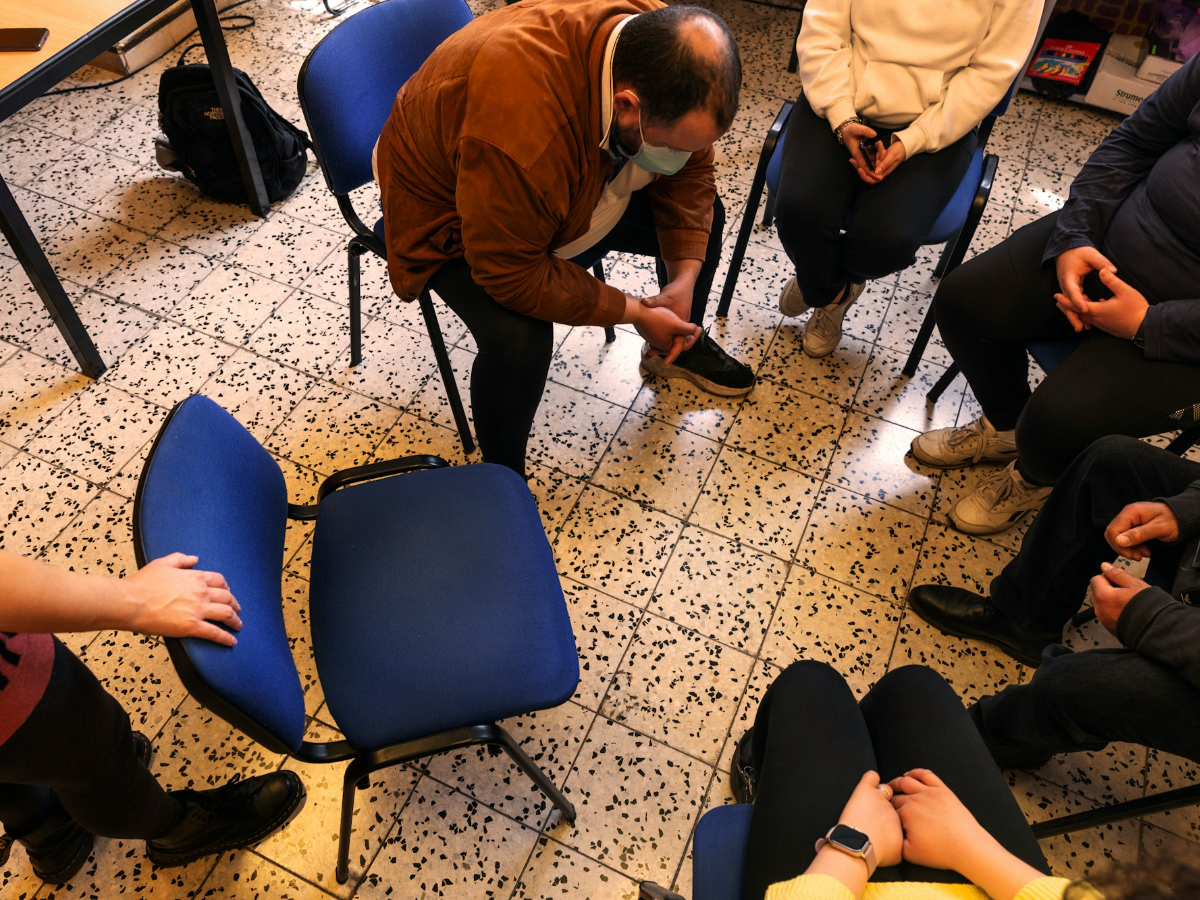
Anxiety has a way of making ordinary moments feel like tests you did not study for. Anxiety can make even small tasks feel heavy, like your energy is being taxed before you have done anything. If you have ever thought, “I know I need support, but I do not know where to start,” you are exactly who educational workshops are built for.
Educational workshops on mental health sit in a helpful middle space. They are not therapy, and they are not meant to replace clinical care. They are structured learning experiences that teach real-world skills, make mental health concepts less intimidating, and remind you that you are not the only one working through this.
What educational workshops on mental health actually are
Workshops are guided sessions where you learn a focused topic in a set amount of time, usually 60-120 minutes or a short series across several weeks. The best ones are practical, interactive, and designed for everyday life. You might learn how anxiety works in the body, how to spot thought traps, how to build a calmer morning routine, or how to communicate your needs without feeling guilty.
A workshop is different from reading an article because it adds structure, pacing, and a sense of support. Someone is walking you through the material. You can ask questions. You can practice skills in the moment. And you can hear other people describe experiences that sound a lot like yours.
It is also different from therapy. Therapy is personalized and often goes deeper into your history and patterns. Workshops focus on education and skill-building for a group. They can be a great first step if you are unsure about therapy, or a strong complement if you are already working with a professional.
Why workshops can help when anxiety or depression is loud
When you are anxious or depressed, your brain tends to narrow its focus. You may fixate on what is wrong, what could go wrong, or what you cannot do. Workshops widen the lens. They give you language for what is happening, and language matters because it creates options.
For anxiety, the biggest relief often comes from understanding the cycle. You feel a sensation, you interpret it as danger, your body ramps up, and then you try to avoid the trigger. Avoidance works briefly, which teaches your brain to repeat it. A workshop can help you spot where you can gently interrupt that cycle with grounding, pacing, and realistic reframes.
For depression, the shift is often about momentum and self-trust. Depression can convince you that nothing will help, so you stop trying, which then reinforces the belief. Workshops tend to focus on tiny, repeatable actions: mood-supportive routines, behavioral activation, and ways to lower the barrier to getting started.
There is also a community benefit that is hard to replicate alone. Hearing someone else say, “I thought it was just me,” can loosen shame. Shame thrives in isolation. Skills grow faster in connection.
The topics that tend to make the biggest difference
Not every workshop will fit what you need right now. Sometimes your best choice is the one that helps you get through this week, not the one that sounds most impressive.
Anxiety-focused workshops usually cover how the stress response works, what panic is and is not, and how to respond without escalating. You may practice breathing that does not accidentally make you dizzy, grounding that uses your senses, and ways to reduce reassurance-seeking without feeling abandoned.
Depression-focused workshops often explore the connection between thoughts, mood, sleep, movement, and social contact. You might learn how to plan “minimum viable” routines for low-energy days and how to rebuild pleasure and meaning in small steps.
Many people benefit from workshops that address both, because anxiety and depression can show up together. You may feel anxious about falling behind, then depressed about your ability to catch up, then anxious again because you feel stuck. A workshop that teaches emotional regulation, self-compassion, and realistic goal-setting can be a strong baseline.
What a good workshop feels like (and what to avoid)
A helpful workshop leaves you feeling clearer and more capable, not judged, pressured, or overwhelmed. You should walk away with one or two tools you can use immediately, plus a simple way to practice them.
Look for facilitators who speak in plain language. If the session uses so much jargon that you feel lost, it is not accessible education. Also pay attention to how the workshop handles sensitive content. A responsible facilitator will offer opt-outs, encourage pacing, and remind participants that intense symptoms deserve professional support.
Be cautious with workshops that promise fast, guaranteed results, or that frame willpower as the main solution. Mental health is not a character test. It is a set of skills, nervous system patterns, life circumstances, and support needs that vary from person to person.
It also depends on where you are in your journey. If you are in acute crisis, actively self-harming, or unable to function day to day, a workshop alone is not enough. In that case, the best workshop is one that helps you connect to appropriate care and keeps you safe.
How to choose the right workshop for you
Start with your current constraint. Is it time, energy, money, or focus? Your choice should respect what you realistically can do.
If your energy is low, pick a shorter workshop with clear takeaways and a gentle pace. If your anxiety is high, look for a session that teaches stabilization skills first, like grounding and coping plans, before jumping into deeper reflection. If you struggle with consistency, a series can help because repetition builds habits.
Pay attention to the format. Some people love live sessions because they feel supported and accountable. Others prefer on-demand options so they can pause and replay. Neither is better. The best format is the one you will actually use.
And make sure the workshop matches your values. If you want a community-centered, practical approach, choose educators who emphasize skill-building, compassion, and realistic expectations.
How to get the most out of an educational workshop
You do not need to be a perfect student to benefit. You just need a plan that meets you where you are.
Before the session, choose one intention. Not a life overhaul. Something like, “I want one tool for racing thoughts” or “I want to understand why my motivation disappeared.” Having a single target keeps your brain from trying to absorb everything at once.
During the workshop, give yourself permission to participate at your level. Some days you will ask questions. Other days you will listen quietly. Both count. If you notice comparison thoughts like “Everyone else is doing better than me,” label them gently as comparison, then return to the material.
After the workshop, make your next step tiny. If you learned a breathing skill, practice it for 60 seconds once a day for a week. If you learned a thought-challenging tool, use it on one recurring worry, not every worry you have ever had. The goal is to build trust with yourself through repetition.
If the workshop included a workbook or handouts, treat them like a menu, not homework. Pick what helps. Skip what does not. Learning is allowed to be imperfect.
Bringing workshop skills into real life
Workshops are most powerful when they turn into micro-habits that fit into your routine.
If mornings are hard, connect one skill to something you already do. While your coffee brews, try a grounding exercise. While you brush your teeth, do a quick body scan. If evenings are when your mind spirals, set a two-minute “closeout” ritual: write down tomorrow’s first small action, then a sentence of self-compassion that you would say to a friend.
If social support is part of your plan, share one tool with a trusted person. Not as a performance, but as a way to make it easier to use. For example, you can tell a friend, “When I get quiet, I am practicing grounding, not ignoring you.” That kind of transparency reduces misunderstandings and helps you feel less alone.
And if you are in therapy, workshops can give you extra structure between sessions. You can bring the worksheet, the skill, or even a question you could not answer yet. That is not “doing it wrong.” That is building continuity.
Community makes this easier
Many people try to fix anxiety or depression in private, as if needing support is a personal failure. It is not. Community support does not erase your struggles, but it changes the environment you are trying to heal in.
If you want accessible, skills-based learning that respects where you are starting, organizations like Fitness Hacks For Life create education that is designed to be usable, not intimidating. When mental health education is free or low-cost, more people can take the first step without having to prove they are “struggling enough” to deserve help.
Workshops also create a ripple effect. When one person learns how to talk about anxiety without shame, they often model it for family, coworkers, or friends. That is how culture changes – one honest conversation at a time.
A note on trade-offs and expectations
Workshops are not magic. Sometimes the first one you attend will not click. Sometimes the facilitator style will not match you, or the group energy will feel off. That does not mean you failed. It means you are learning what you need.
Also, skill-building can feel uncomfortable at first. If you practice a coping skill and feel awkward or skeptical, that is normal. Your brain is used to its current pattern, even if that pattern hurts you. New patterns take repetitions before they feel natural.
If you keep the bar realistic, workshops can be one of the gentlest ways to build momentum. Not by forcing big change, but by making the next right step clearer.
You deserve support that is practical, kind, and built for real life. If you choose one workshop and show up as you are, you are already doing something brave: you are choosing to learn, not just endure. Let that be enough for today, and let tomorrow be one small practice that proves you can keep going.
Leave a Reply